News
Trump orders review to label some Muslim Brotherhood chapters as terrorist groups

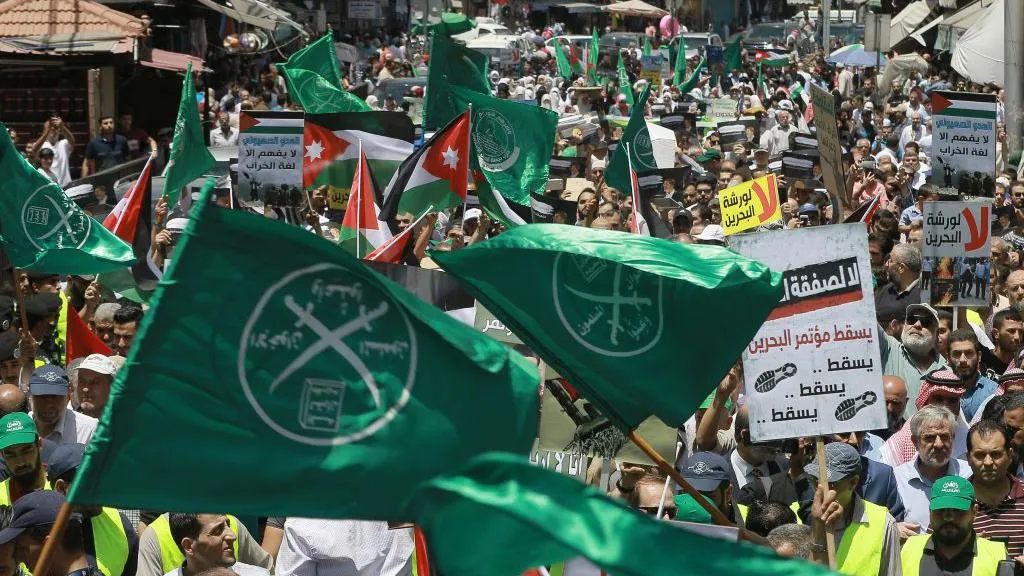
US President Donald Trump has directed senior officials to examine whether certain branches of the Muslim Brotherhood should be formally designated as terrorist organisations, a move that could result in sweeping sanctions and travel restrictions. The order, issued on Monday, calls for a detailed investigation into the group’s chapters in Egypt, Lebanon and Jordan.
The directive instructs Secretary of State Marco Rubio and Treasury Secretary Scott Bessent to work with Attorney General Pam Bondi and Director of National Intelligence Tulsi Gabbard to produce an assessment within 30 days. If officials conclude that the groups meet the criteria for designation, they would have an additional 45 days to impose sanctions. The White House says the review is based on concerns about the Brotherhood’s alleged links to Hamas and what it describes as destabilising campaigns that threaten US interests and regional stability.
Founded nearly a century ago in Egypt, the Muslim Brotherhood has grown into a global movement with branches across the Middle East and beyond. While its activities and ideologies differ widely from country to country, many governments in the region view the organisation as a political threat. It is banned in Egypt and Jordan, and several other Arab states treat its affiliates as extremist groups. The Brotherhood has long denied involvement in terrorism, though governments critical of the organisation accuse it of supporting militant activities.
Trump previously considered a similar designation during his first term following discussions with Egyptian President Abdel Fattah El Sisi, whose government cracked down on the Brotherhood after taking power. The new executive order signals a renewed effort to restrict its influence internationally. If designated, American citizens and residents would be prohibited from providing support to the group, and its members could be barred from entering the United States. Any assets linked to its branches could also be frozen.
The White House said in a statement that President Trump aims to confront what it calls the Brotherhood’s transnational network, which it accuses of fuelling violence and contributing to regional instability. The move follows recent action by the governor of Texas, who declared the Muslim Brotherhood a foreign terrorist organisation. The Texas order also applied the same classification to the Council on American Islamic Relations, the largest Muslim civil rights organisation in the US, and blocked both groups from purchasing land in the state.
While the Brotherhood’s ideology varies across its branches, many of its members support political systems influenced by Islamic law. Its chapters in Egypt, Lebanon and Jordan have historically played different roles ranging from political participation to social activism. Jordan banned the group in April, with authorities arresting several members on suspicion of planning drone and rocket attacks.
The review ordered by the Trump administration is expected to influence US relations with Middle Eastern governments, many of whom have long urged Washington to take a tougher stance on the Muslim Brotherhood. The outcome will depend on the findings of the forthcoming intelligence and policy assessment.