Business
Why Time Is Running Out for Germany’s Green Hydrogen Ambitions

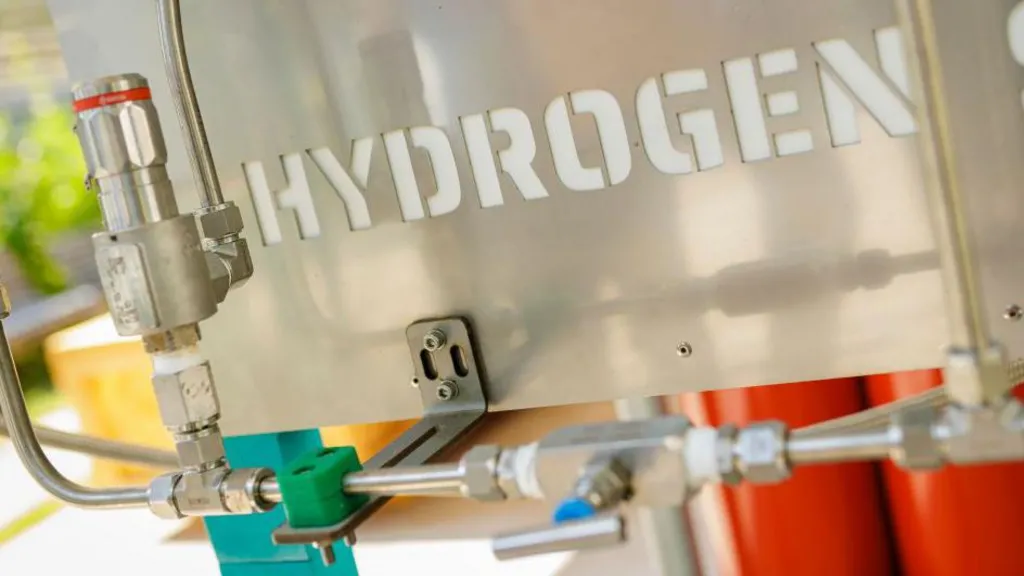
Inside a spotless factory near Hamburg, industrial robots quietly wait for work. These machines assemble electrolysers, the devices that split water into hydrogen and oxygen. Quest One, the company operating the facility, uses advanced proton exchange membrane technology to build equipment meant to support Germany’s future green hydrogen industry. The robots work quickly and precisely, outperforming human labour. Yet the factory floor is not running at full speed. Orders remain far below capacity, leaving expensive machinery and specialised workers waiting for demand that has not arrived. Earlier this year, Quest One had to cut its workforce by 20 percent, a sign that the market is struggling to grow. Executive vice president Nima Pegemanyfar says the challenge is not in producing the equipment but in finding enough buyers. Demand, he explains, is the main obstacle.
Why Green Hydrogen Remains Too Expensive
One major barrier is cost. Green hydrogen, which is produced using renewable electricity, remains much pricier than fossil fuel-based hydrogen. Globally, low-emission hydrogen of all types accounts for less than one percent of production. While companies hope large-scale production will eventually drive prices down, most projects are still small and scattered. Quest One believes green hydrogen could eventually reach a price of around four euros per kilogram, nearly half of what it costs in Germany today. But that depends on far more investment and demand than the industry is currently seeing.
Mismatch Between Hype and Real Needs
Another problem is that public discussion often focuses on uses for hydrogen that experts say are inefficient. Some industries such as steel, chemicals and shipping urgently need green hydrogen for processes that cannot easily run on electricity. Yet topics like using hydrogen for home heating or cars receive much more attention, despite being far less suitable. Christian Stöcker, a communications professor in Hamburg, argues that these distractions slow the development of hydrogen for the industries that truly need it. He also worries about the influence of fossil fuel companies and automakers, who may use hydrogen to protect existing infrastructure rather than promote long term sustainability.
Infrastructure Investments at Risk
The stakes are high. Germany is already pouring money into major infrastructure projects built around hydrogen. Plans include a network of pipelines linking the Port of Hamburg to hydrogen producers and industrial users across northern Germany. In Lower Saxony, Storengy Deutschland is constructing underground salt caverns where hydrogen can be stored more than a thousand metres below ground. The idea is to convert excess renewable electricity into hydrogen during the summer and use it in winter when demand rises. This system, however, is expensive and may not be fully operational until the 2030s. International hydrogen transport routes are also in development, connecting Germany to countries as far away as India, Saudi Arabia, Chile, and Namibia. Hydrogen can be shipped as ammonia, but significant energy is lost during conversion and reconversion. Critics also warn that large-scale hydrogen production abroad could harm sensitive ecological areas and deepen global inequalities by exploiting resources in developing countries.
A Race Against Time
For the green hydrogen industry, everything now depends on policy. Companies say only strong government support can bridge the gap between today’s high costs and the future where hydrogen becomes a cornerstone of clean energy. Without it, factories, pipelines, storage caverns, and international partnerships may fail to reach their potential. Germany has made big promises about clean energy leadership. But unless demand accelerates quickly, its hydrogen ambitions could fall behind just as the global transition speeds up.