Business
Rolls Royce Seeks Government Backing for 4 Billion Dollar UltraFan Engine Programme

Rolls Royce is pressing the UK government to commit financial support for the development of its next generation UltraFan aircraft engine, a project estimated to cost around 3 billion pounds or roughly 4 billion dollars, according to reports.
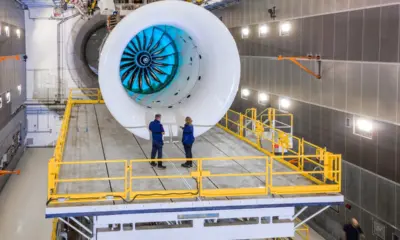
The aerospace and defence group is seeking an initial contribution of between 100 million and 200 million pounds from the government to help fund the development and testing of a demonstrator version known as UltraFan 30. The funding request comes at a time when major industrial projects across Europe are increasingly competing for public backing to remain globally competitive.
UltraFan is being positioned as Rolls Royce’s most advanced civil aerospace engine to date. The company says the technology is designed to deliver significant improvements in fuel efficiency and lower carbon emissions compared with current generation engines. Aviation manufacturers and airlines are under mounting pressure to reduce their environmental footprint as regulators tighten climate targets.
The proposed government support would form part of a broader funding package for research and development. Large scale engine programmes require extensive testing and long term investment before reaching commercial deployment. Industry analysts note that state support has historically played a role in supporting aerospace innovation in the UK, particularly where projects are considered strategically important.
Rolls Royce employs thousands of people across Britain and is regarded as a key national engineering champion. The company has been investing heavily in advanced propulsion systems, including sustainable aviation fuel compatibility and hybrid technologies. UltraFan is expected to underpin the firm’s long term competitiveness in the wide body aircraft market.
The reported request for taxpayer support comes as governments globally assess how best to back domestic manufacturing and clean technology initiatives. In the United States and parts of the European Union, public funding has been used to attract and retain high value industrial projects.
Supporters of the UltraFan programme argue that investment would help secure high skilled jobs and maintain Britain’s position as a leading aerospace hub. Critics, however, may question the use of public funds at a time of broader fiscal pressures.
Rolls Royce has not publicly detailed the full financing structure of the project, but industry observers say early stage demonstrator funding is critical to proving performance claims and attracting future commercial orders. The company has previously highlighted that UltraFan could offer double digit improvements in fuel efficiency over earlier Trent engine models.
The development also aligns with the UK government’s stated ambition to lead in green aviation technologies. Any decision on financial backing is likely to factor in economic impact, export potential and environmental benefits.
As global aviation demand recovers and competition intensifies, the outcome of discussions between Rolls Royce and the government could shape the next phase of Britain’s aerospace strategy.