Business
Persimmon Forecasts Strong Growth in 2026 as UK Homebuilder Defies Industry Slowdown

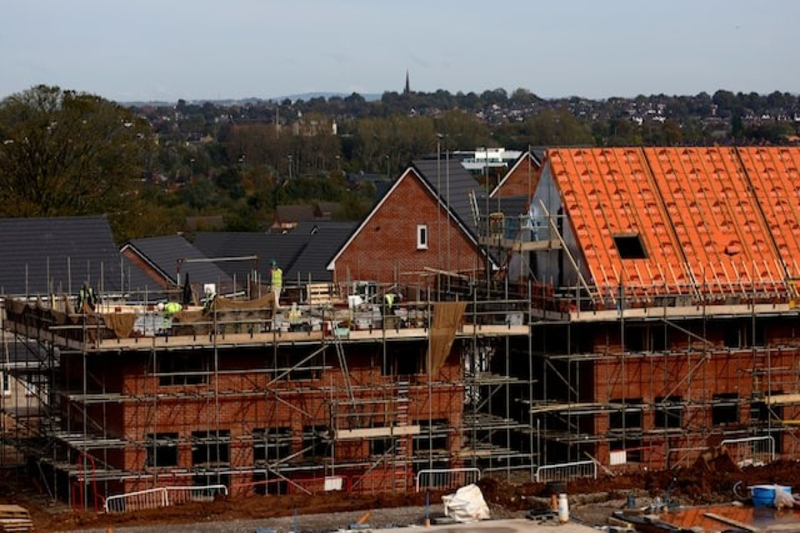
British homebuilder Persimmon has delivered an optimistic outlook for 2026, predicting stronger profits and higher home deliveries despite wider uncertainty in the housing sector. The company reported solid financial results for 2025 and said early sales activity in the new year has remained encouraging. Investors responded positively to the announcement, pushing Persimmon’s shares higher as the company signalled confidence in its ability to outperform competitors facing weaker demand and tighter margins. The housing market in Britain has experienced mixed conditions in recent months, yet Persimmon believes improving sales momentum and disciplined operations could support growth throughout the coming year.
The company expects its underlying operating profit in 2026 to reach the upper end of analyst forecasts, which estimate earnings between 486 million pounds and 517 million pounds. Persimmon also anticipates delivering between 12000 and 12500 homes during the year as demand gradually recovers following a challenging period for the UK property market. The company’s stronger outlook contrasts with recent warnings from several rival builders who have highlighted rising costs and cautious buyers as major challenges. Persimmon’s leadership said sales in the opening weeks of the year have been particularly encouraging and that activity in the build to rent market is also showing signs of recovery after slowing late last year.
Chief executive Dean Finch said the company’s performance so far reflects both improving market conditions and operational strengths developed over recent years. He noted that Persimmon’s future outlook assumes that geopolitical tensions, including conflict in the Middle East, will not significantly disrupt economic confidence. According to Finch, early trading results indicate the company could return to growth during 2026 if wider economic conditions remain stable. The company has continued to attract buyers through targeted marketing initiatives and incentives designed to support demand in a housing market still adjusting to higher borrowing costs and evolving consumer sentiment.
A key factor behind Persimmon’s resilience has been its vertically integrated business model, which allows the builder to produce many of its own construction materials including bricks, roof tiles and timber frames. This approach has helped protect the company from the cost inflation that has affected several competitors who rely more heavily on external suppliers. Analysts say the strategy has enabled Persimmon to maintain stronger cost control while continuing to expand its building capacity. Industry observers note that supply chain disruptions and rising construction costs have placed pressure on profit margins across the sector, making Persimmon’s integrated production system a competitive advantage.
Financial results for the year ending December 2025 also exceeded expectations, with the company reporting underlying pre tax profit of about 445.6 million pounds. The stronger performance reinforced investor confidence and contributed to the sharp rise in the company’s share price following the announcement. Market analysts say the results indicate Persimmon has been able to navigate market challenges more effectively than several rivals. One industry analyst said the company appears to be executing its strategy at the right time by balancing cost discipline with continued investment in housing supply, which could support growth as demand stabilises.
Looking ahead, Persimmon expects any potential impact from inflation in construction costs to remain limited during the current year due to existing supplier agreements and increased production capacity already planned for 2026. The company is continuing to expand housing output while maintaining pricing strategies designed to attract buyers in a competitive market. With interest rates and broader economic conditions still influencing the housing sector, developers across Britain will be closely monitoring demand trends throughout the year. Persimmon’s positive forecast suggests that parts of the UK housing market may be showing early signs of recovery even as some builders remain cautious about the months ahead.