Tech
London surgeon performs UK’s first long distance robotic operation on patient in Gibraltar

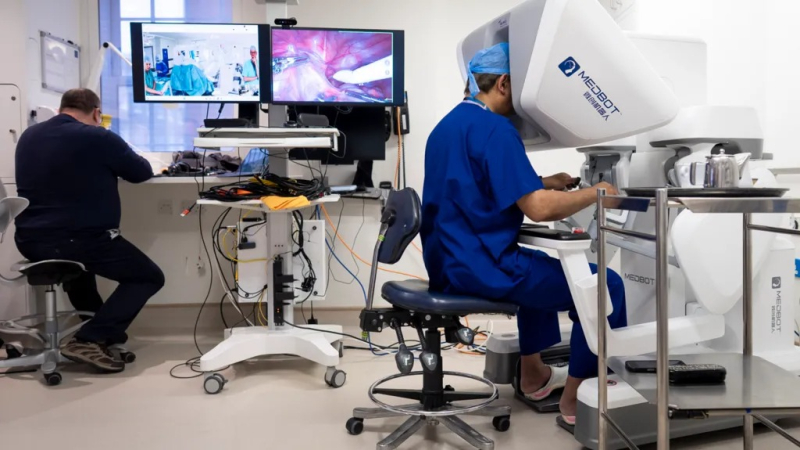
A surgeon based in London has successfully carried out what is believed to be the United Kingdom’s first long distance robotic operation on a patient located more than 1,500 miles away in Gibraltar. The groundbreaking procedure involved a robotic assisted prostate removal performed remotely using advanced medical technology that connected the surgeon and patient across international borders. The operation was conducted by leading robotic urological surgeon Professor Prokar Dasgupta from The London Clinic, while the patient remained in a hospital in Gibraltar. Medical experts say the achievement represents a major step forward for remote healthcare and could transform how specialized treatment is delivered to patients in remote or underserved areas.
The patient, 62 year old Paul Buxton, underwent the procedure after being diagnosed with prostate cancer shortly after Christmas. Buxton, who originally comes from Burnham on Sea in Somerset but has lived in Gibraltar for four decades, agreed to take part in the pioneering trial. He said he saw the opportunity as both a practical solution and a chance to contribute to medical progress. Gibraltar has only one hospital and residents with complex medical needs often travel abroad for specialist treatment. Buxton explained that without the remote surgery he would likely have had to travel to London, join a waiting list for treatment and remain in the United Kingdom for several weeks during recovery.
The operation was performed using the Toumai Robotic System, which allowed the surgeon to control robotic instruments from a console located at The London Clinic. The robot in Gibraltar was equipped with a high definition three dimensional camera and four robotic arms capable of performing highly precise surgical movements. These instruments were connected to the surgeon’s console through a high speed fibre optic network with a delay of only a fraction of a second. Engineers also installed a backup 5G connection to ensure the system remained stable throughout the procedure. A medical team remained present in Gibraltar during the surgery to assist and intervene if any technical issues occurred.
Professor Dasgupta said the experience felt remarkably similar to operating person. The advanced technology allowed him to see the surgical area in high definition while precisely controlling the robotic instruments in real time. According to the surgical team the connection between London and Gibraltar remained stable during the entire operation and the procedure was completed successfully. Buxton later said he felt well cared for during the process and reported feeling in good health after the operation. The successful outcome has encouraged medical researchers and surgeons to explore further applications of long distance robotic surgery.
Medical specialists believe the technology could dramatically improve access to high quality surgical care in smaller communities or remote locations where specialist surgeons may not be available. Instead of patients travelling long distances for treatment, experienced surgeons could operate from major medical centres while local teams support the procedure on site. This approach could reduce travel costs, shorten waiting times and make advanced medical expertise available to a much wider population. Experts also say the development could be particularly beneficial for isolated regions and overseas territories where access to specialist healthcare services is limited.
The Gibraltar operation is part of a series of test procedures exploring the potential of remote robotic surgery. A second patient has already undergone a similar operation in the same programme, and another demonstration procedure is scheduled to take place soon. That upcoming operation will be broadcast live to thousands of leading urology specialists attending an international medical conference, allowing surgeons around the world to observe the technology in action.
Healthcare leaders say robotic assisted surgery is expected to become increasingly common as medical technology continues to advance. The National Health Service has already outlined plans to significantly expand robotic supported procedures across the country in the coming years. If remote surgical systems continue to prove reliable and safe, they could play a major role in the future of global healthcare by allowing specialist surgeons to treat patients regardless of distance.