Business
FTSE Markets Rise as Oil Prices Fall on Hopes of Middle East De Escalation


London’s main stock indexes rebounded strongly as investors responded to signs that tensions in the Middle East could ease, helping global markets recover after several days of declines. The FTSE 100 and FTSE 250 both posted their largest one day gains in nearly a year as falling oil prices improved investor confidence and eased concerns about rising inflation. The market recovery came after comments suggesting that the conflict involving Iran could move toward de escalation, prompting a sharp drop in crude oil prices. The improvement in market sentiment lifted a wide range of sectors in London trading and helped reverse losses that had weighed on British equities earlier in the week.
The blue chip FTSE 100 index closed the session up about 1.6 percent while the mid cap FTSE 250 climbed roughly 1.8 percent. Investors welcomed the sudden decline in oil prices, which fell close to eleven percent after recent spikes caused by fears that the conflict could disrupt energy shipments through the Strait of Hormuz. The shipping route is one of the most important oil transport corridors in the world and any disruption can quickly affect global energy prices. Lower oil prices helped reduce concerns about a renewed surge in inflation that had been worrying financial markets since tensions in the region escalated.
Financial analysts noted that British assets had faced particularly heavy pressure during the recent market volatility because the United Kingdom is considered more vulnerable to energy price shocks than several other European economies. Britain relies heavily on imported gas and already faces pressure on public finances, which makes rising energy costs more damaging for economic stability. Market participants have therefore been closely monitoring geopolitical developments in the Middle East as they evaluate the potential impact on inflation, economic growth and investor confidence across the UK economy.
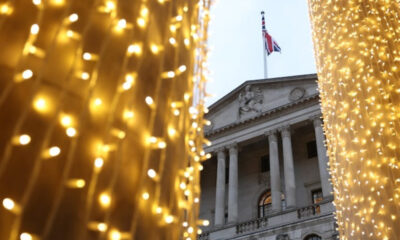
Attention is also turning toward the Bank of England which is scheduled to announce its next interest rate decision later this month. Some financial institutions have adjusted their forecasts for possible rate cuts as uncertainty around inflation continues. Analysts at major global banks recently delayed expectations for a rate reduction until the second quarter of the year, citing concerns that higher energy costs could keep inflation elevated for longer than previously predicted. Economic officials have also warned that Britain’s inflation rate could finish the year closer to three percent if energy prices remain high.
Most major sectors in the London market recorded gains during the session as investor sentiment improved. However energy companies moved lower because of the sharp decline in oil prices, with major producers including BP and Shell seeing their shares fall. In contrast several consumer and property related companies posted gains. Housebuilder Persimmon advanced after delivering an optimistic outlook for housing deliveries and profits in the coming year, while Domino’s Pizza Group also saw modest gains as investors reacted to expansion plans linked to its new fried chicken brand.
The rebound in London stocks reflects how closely global markets are currently tied to geopolitical developments and energy price movements. Investors are continuing to assess whether tensions in the Middle East will stabilise or escalate further, as the outcome could influence inflation, interest rates and economic growth across many countries. For now the decline in oil prices has provided temporary relief to financial markets, allowing the FTSE indexes to recover from recent losses and restoring a measure of confidence among investors monitoring the evolving global situation.