Business
John Lewis Restores Staff Bonus as Retailer Reports Higher Profit but Warns of Tough Outlook

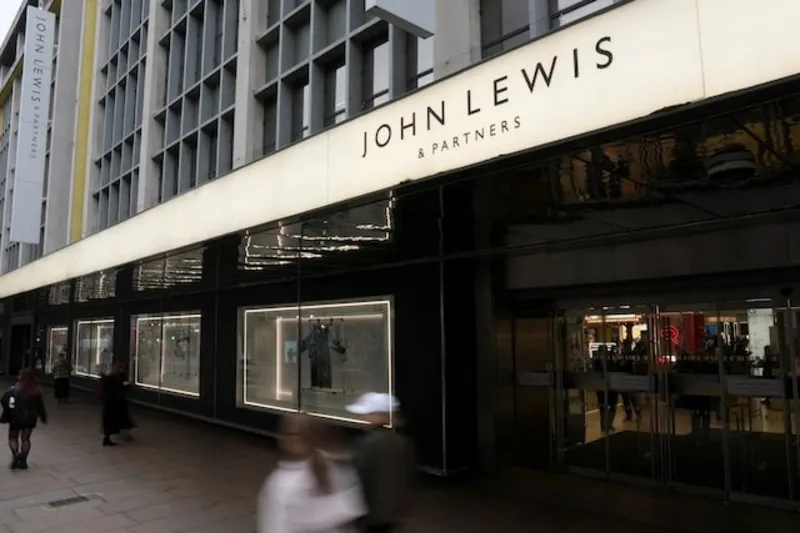
British retail group John Lewis Partnership has reinstated its staff bonus after a four year pause following a rise in annual profit, though the company warned that challenging economic conditions could affect trading in the year ahead. The employee owned retailer reported stronger financial performance for the year ending in January, supported by growth in both its Waitrose supermarket chain and John Lewis department stores. While the bonus announcement was welcomed by employees, company leadership stressed that the wider economic environment remains uncertain and requires a cautious approach to future business planning.
The retailer said annual profit before tax, bonuses and exceptional items increased by six percent compared with the previous year. Sales also grew steadily, reaching more than thirteen billion pounds as demand improved across its businesses. The company confirmed that employees, known internally as partners, would receive a bonus equivalent to two percent of their annual salary. This marks the first time in four years that the partnership has been able to reward staff in this way, following a period of financial pressure linked to the pandemic and the cost of living crisis.
The bonus restoration reflects the company’s efforts to stabilize its finances after several difficult years for Britain’s retail sector. Department stores were among the businesses most affected by pandemic related restrictions and changing consumer behavior. Online shopping expanded rapidly during that period, forcing many traditional retailers to rethink their strategy. John Lewis has since focused on modernizing its stores, strengthening its digital platforms and improving supply chains to better compete in a rapidly evolving retail market.
Growth in the Waitrose supermarket chain played a major role in the improved financial results. Waitrose sales increased significantly during the year as customers continued to prioritize grocery spending even amid wider economic uncertainty. The John Lewis department store division also recorded modest growth, suggesting that demand for home goods, electronics and fashion products has begun to recover. Company leaders say the combination of grocery retail and department stores provides the partnership with a balanced business model capable of adapting to changing consumer trends.
Despite the improved results, the retailer signaled caution about the outlook for consumer spending in Britain. Surveys show that households have become increasingly pessimistic about the economic outlook, particularly as global events push energy prices higher and raise concerns about inflation. Rising costs for fuel, food and utilities could limit discretionary spending in the months ahead. Retail analysts warn that these pressures may affect sales growth across the sector, especially for businesses that rely heavily on consumer confidence.
Economic uncertainty is also affecting expectations for the broader retail market. Analysts have recently revised profit forecasts for several major retailers as higher energy prices and transport costs threaten to squeeze household budgets. When consumers face higher essential expenses, spending on non essential items such as clothing, electronics and home goods often slows. This environment makes it more challenging for retailers to maintain strong growth, even if underlying demand remains stable in some categories.
John Lewis leadership has emphasized that the company is taking steps to strengthen its position despite the uncertain environment. Investment plans include upgrading physical stores, expanding online capabilities and enhancing logistics operations to deliver goods more efficiently. Executives believe these changes will help the partnership remain competitive as retail increasingly shifts toward digital commerce and integrated shopping experiences that combine physical stores with online platforms.
Company officials say the partnership enters the coming financial year with improved liquidity and relatively low levels of external borrowing, giving it greater flexibility to manage economic uncertainty. While challenges remain in the wider economy, the retailer expressed confidence that continued investment and operational improvements will allow the business to make further progress. For employees and customers alike, the restoration of the staff bonus is being viewed as a signal that the partnership is moving beyond the financial difficulties of recent years.