News
Passenger killed by Tube at London station could not reach safety due to cables, investigation finds

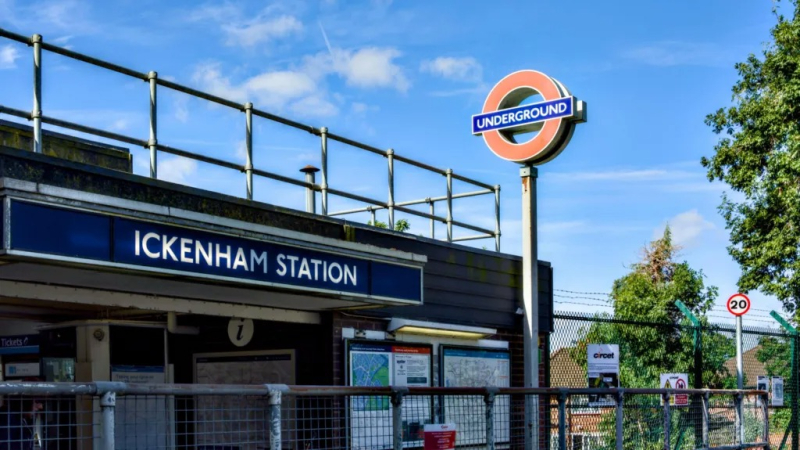
An investigation into a fatal incident on the London Underground has revealed that a passenger who fell onto the tracks at a west London station was unable to reach a designated place of safety because communication cables blocked access. The incident occurred at Ickenham Underground station on the evening of 28 March 2025 when the passenger fell onto the track shortly before a train approached the platform. According to the findings of the Rail Accident Investigation Branch, the individual was aware that a train was approaching but could not move to a safe recess beneath the platform before being struck. The train later came to a stop after its automatic safety system detected contact with the passenger.
Investigators reviewed CCTV footage from the station and found that the passenger had spent several minutes descending the stairs to the platform and lost their balance multiple times before falling onto the track. The report described the individual as vulnerable and noted that they lay on the track for approximately two minutes before the train arrived. During that time the passenger attempted to move toward an under platform recess designed as a refuge for people on the track. However, communication cables installed within the recess prevented the passenger from entering the space, leaving them exposed on the track bed as the train approached.
The investigation also highlighted several environmental factors that made it more difficult for the driver or station staff to detect the passenger before the collision occurred. Platform lighting created a strong contrast between the brightly lit platform and the darker track area below. The passenger was wearing dark clothing, which further reduced visibility in the dimly lit track bed. As a result neither the train operator nor station personnel noticed the person on the track before the train departed from the platform. The train’s emergency braking system activated automatically when it made contact with the passenger, leading to the discovery of the incident moments later.
The Rail Accident Investigation Branch concluded that physical obstructions within the under platform recess played a significant role in preventing the passenger from reaching safety. These recesses are intended to provide a protective space where someone on the track can avoid being struck by a train. However investigators found that the communication cables installed in the recess at Ickenham station effectively blocked access to the refuge area. The report recommended that Transport for London review and update safety standards to ensure such recesses can reliably function as safe spaces in the event of an emergency.
The report also recommended that Transport for London conduct platform specific risk assessments and explore additional measures to reduce the likelihood of passengers falling onto the tracks. Such measures could include improved lighting, clearer visibility of refuge areas and enhanced safety barriers in certain locations. Transport for London said it fully supported the investigation and would carefully review the recommendations made by the Rail Accident Investigation Branch as part of ongoing safety improvements across the Underground network.
Investigators also examined procedures followed after the accident, including policies relating to staff drug and alcohol testing. London Underground guidelines state that testing should occur as soon as possible following a serious incident. In this case testers arrived shortly after the train operator had completed their shift and arrangements had already been made to take the driver home for welfare reasons. Although there was no evidence that the operator had been impaired, investigators noted that established testing procedures were not followed exactly according to policy.
The findings come amid continued scrutiny of safety practices across the London Underground system following several fatal incidents in recent years. Safety investigators emphasize that while such accidents remain rare, infrastructure design and operational procedures must be constantly reviewed to reduce risks wherever possible. The latest report underscores the importance of maintaining clear access to safety refuges and ensuring that station environments allow passengers and staff to respond quickly in emergency situations.