Politics
Labour MP Suspended After Breaking Ranks on Farmland Tax Proposal

A Labour MP has been suspended from the party after voting against the government’s plan to introduce a tax on inherited farmland valued above one million pounds. Markus Campbell-Savours, who represents the rural constituency of Penrith and Solway, chose to oppose the policy during an initial vote in Parliament, defying the party’s instruction. His decision highlighted growing unease among Labour MPs representing countryside communities, many of whom fear the policy could deeply harm family-owned farms.
Growing Discomfort Among Rural Labour MPs
While Campbell-Savours voted against the measure, dozens of Labour backbenchers opted to abstain altogether. MPs from rural areas have voiced concerns for months, warning that the plan risks undermining a sector already dealing with tight margins and unpredictable conditions. The new tax would remove long-standing relief for inherited agricultural assets and instead impose a twenty percent levy above the one million pound threshold. Ministers say the plan is fair and is expected to generate hundreds of millions of pounds annually by 2029 to support public services.
Farmers Warn of Serious Consequences
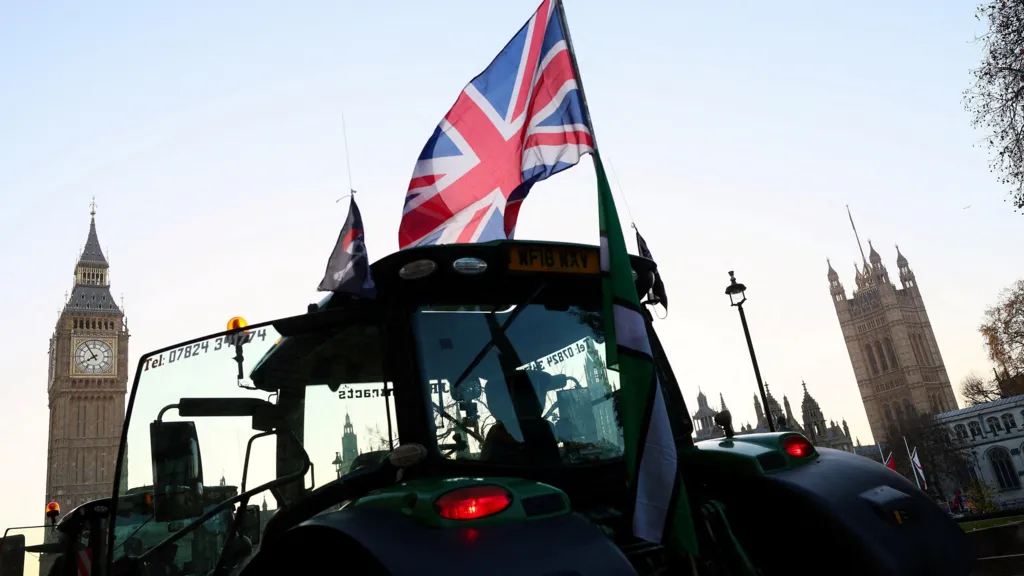
The announcement last year sparked protests across the country, with farmers arguing the tax could force the break-up of family farms passed down through generations. Many insisted this would not only damage livelihoods but also weaken local food production. The relief, which dates back to the 1980s in its modern form, has long been viewed by farming groups as essential to the stability of the agricultural sector. Ministers avoided immediate confrontation by leaving the proposal out of last year’s Budget bill, but MPs were required to take an initial vote this week ahead of final legislation later in the year.
Campbell-Savours Says He Kept His Promise
Explaining his decision, Campbell-Savours said he had vowed to his constituents that Labour would not tamper with the relief and could not support the policy in good conscience. He warned that many farmers in his constituency would be devastated by the impact on their businesses. By voting against the plan, he said he was honouring his commitment and acting in the best interest of the people he represents. As a result of his vote, Labour informed him that he was suspended from the party whip and will now sit as an independent MP.
Internal Pressure and Mounting Political Tensions
The Commons ultimately approved the proposal with 327 votes in favour and 182 against. However, eighty-four Labour MPs did not participate, an unusually large number for a Budget-related vote. Members of Labour’s rural research group said they believed around thirty MPs had deliberately abstained. Several MPs urged ministers to reconsider aspects of the policy, arguing that it risks deepening frustration among farming communities. The National Farmers Union had also encouraged Labour MPs to abstain to pressure the government into softening the proposal.
Government Defends Policy as Fair and Targeted
Ministers insist the changes will not burden small family farms, citing the generous threshold and additional standard reliefs available to individuals. They also highlighted a concession introduced recently that allows unused portions of the one million pound allowance to be transferred between spouses and civil partners, a change expected to reduce the overall tax revenue. Treasury minister James Murray argued that the policy strikes the right balance between fairness and fiscal responsibility.
Opposition Calls for Rethink
The Conservatives and Liberal Democrats have both criticised the proposals, arguing they will hurt rural communities. Some Labour MPs echoed these concerns, warning the party risks losing the trust of farmers who already feel overlooked. One MP said many farmers live on narrow or inconsistent profit margins and do not resemble the wealthy landowners some imagine. Despite the pushback, the government maintains that the revised plan presents a fair solution that protects public finances while still offering significant relief for many agricultural families.