Tech
Top Real World Examples of AI in Manufacturing Today

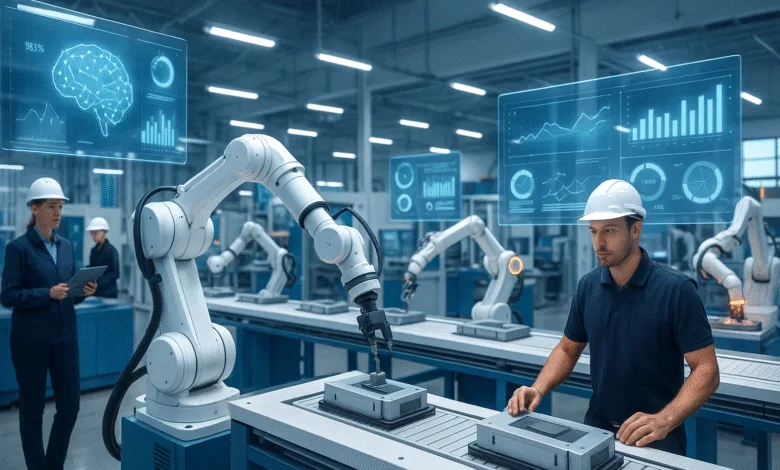
Manufacturing is undergoing one of the most significant transformations in its history, and artificial intelligence is at the center of this change. For decades, factories relied mainly on human labor and simple automation to get work done. Today the environment looks entirely different. Smart systems are being trained to understand tasks, learn from data, and make quick decisions that used to require human supervision. These AI-powered tools are now improving speed, accuracy, and efficiency on production lines around the world.
The shift is not happening in theory. It is already visible in real factories where AI solutions are working every day. From helping engineers repair machines before they break to ensuring product quality at incredible speed, AI is becoming a trusted partner in the industrial sector.
AI Powered Predictive Maintenance in Heavy Industries
One of the most impactful uses of artificial intelligence in manufacturing is predictive maintenance. Instead of waiting for machines to fail, companies now use AI to predict when equipment is likely to malfunction. Sensors installed on machines continuously collect data on temperature, vibration, and performance. AI systems then analyze these signals and identify early signs of possible issues.
Car manufacturers, aircraft engine producers and energy companies have embraced this technology. The result is fewer unexpected breakdowns, less downtime and major cost savings. Factories no longer have to halt production suddenly. Maintenance teams can schedule repairs ahead of time and keep machines running smoothly.
Robots Working Side by Side with Human Teams
Collaborative robots often known as cobots have changed the way work is done on factory floors. Unlike traditional industrial robots that remain behind safety barriers, cobots can safely operate near human workers. They assist with repetitive or physically demanding tasks while humans handle jobs that require flexibility and problem solving.
Electronics factories use cobots to assemble components with incredible precision. Automotive plants employ them to lift heavy parts without putting workers at risk. Food processing facilities rely on cobots to package goods efficiently. The partnership between humans and AI empowered robots is reshaping productivity and creating safer working conditions.
AI Driven Quality Control for Faster and More Accurate Output
Quality inspection has always been one of the most important steps in manufacturing. Even small mistakes can lead to large financial losses or safety concerns. AI has now made quality control more accurate and far quicker than manual inspection alone.
Using high resolution cameras and advanced image recognition models, AI systems can detect surface defects, measure dimensions and verify product consistency. These systems analyze thousands of items in minutes and identify issues too small for the human eye to spot. Many electronics, pharmaceutical and consumer goods factories rely on AI vision technologies to ensure every product leaving the factory meets high standards.
Smart Supply Chain Management for Better Planning
AI plays a major role far beyond the factory floor. One powerful example is supply chain optimization. Manufacturers face constant challenges such as fluctuating demand, long delivery times and shortages of raw materials. AI helps companies plan better by analyzing current data, predicting future needs and identifying potential risks before they become serious problems.
With AI enhanced planning tools, production lines receive the right materials at the right time. Delays are reduced and companies can respond quickly to sudden changes in demand. Global manufacturers use these systems to manage warehouses, coordinate transport and maintain consistent stock levels.
AI Guided Customization and Product Design
Another real world example of AI in manufacturing appears in product development and customization. Companies increasingly offer personalized products and AI makes this possible without slowing production. AI can analyze customer preferences, help engineers design new product variations and even simulate how a product will perform.
This results in faster product development cycles and greater flexibility for businesses to meet customer expectations. From apparel to consumer electronics, manufacturers are using AI to innovate more quickly and deliver items that better match individual needs.
A New Era for Global Manufacturing
Artificial intelligence is now deeply embedded in modern manufacturing. Whether through smart maintenance systems, collaborative robots, AI powered quality checks or supply chain intelligence, factories around the world are becoming more efficient and resilient. These technologies also help manufacturers save money, reduce waste and improve workplace safety.
AI will continue growing as a core part of the factory of the future. With every improvement, manufacturing becomes more reliable, more responsive and more capable of meeting the needs of a rapidly changing world.