Tech
Women in tech leaders highlight inclusion and system design at London conference

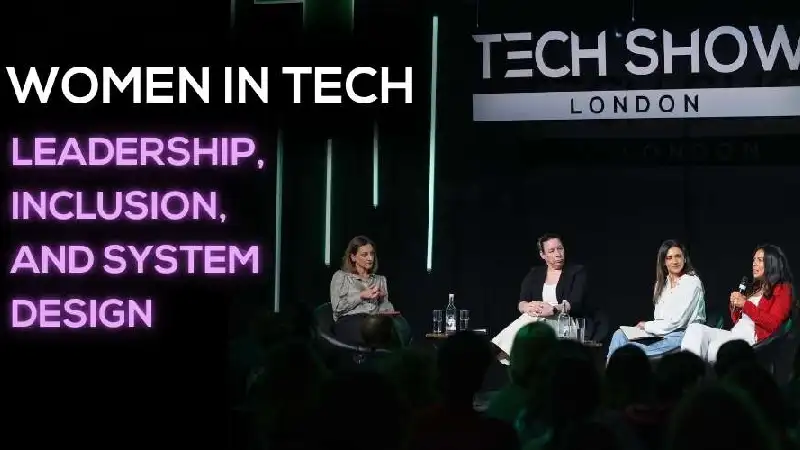
Discussions at Tech Show London placed leadership, inclusion and system design at the centre of conversations about the future of the technology sector, with speakers emphasising structural change over symbolic progress. Across multiple sessions focused on women and diversity in tech, industry leaders explored how leadership evolves, how early career access can be improved and how artificial intelligence systems must be designed with inclusion in mind. The event brought together voices from across technology, finance and public sector organisations, highlighting real world challenges and practical approaches shaping the industry.
Speakers examining leadership progression described a shift from technical expertise to people focused responsibility, noting that leadership requires managing relationships, guiding teams and enabling collective success. Panelists explained that moving into leadership roles involves redefining value creation, where success is measured by team performance rather than individual output. The transition often requires learning to delegate, trust others and step back from hands on problem solving. Experts also pointed out that emotional intelligence and communication are becoming critical leadership skills as teams grow more complex and diverse.
Gender dynamics remained a key theme throughout the discussions, with speakers addressing ongoing challenges around credibility and perception in the workplace. Several participants highlighted the need for women to repeatedly prove their expertise in professional environments, while also navigating expectations around communication style. Trust building, vulnerability and openness were identified as essential tools for effective leadership. Speakers noted that inclusive leadership is not about hierarchy but about creating environments where individuals feel confident to contribute and collaborate without barriers.
The conversation expanded to artificial intelligence, where inclusion was framed as a design requirement rather than a later consideration. Experts stressed that diversity must be embedded at the earliest stages of system development, particularly in how data is selected and models are trained. They warned that biased or incomplete data can directly influence outcomes, making governance and oversight critical. Industry leaders also pointed to gaps in policy frameworks and accountability structures, suggesting that organisations must strengthen auditing processes to ensure AI systems deliver fair and reliable results.
Workforce transformation driven by technology was another focus, with speakers describing a shift toward skills based roles rather than traditional job structures. This transition is creating new opportunities but also challenges around access and experience, particularly for early career professionals. Discussions highlighted how job descriptions and recruitment practices can unintentionally discourage applicants, especially women who may feel they do not meet every listed requirement. The importance of creating clearer pathways into the industry was emphasised as a way to improve diversity and long term participation.
Retention and career progression were identified as ongoing concerns, with speakers noting that representation at entry level does not always translate into leadership roles. Industry professionals pointed to persistent gaps in visibility and mentorship, which can affect confidence and career development. They argued that the issue is not a lack of talent but a lack of structural support within organisations. Addressing these challenges requires changes in workplace culture, promotion practices and long term development strategies rather than short term initiatives.
The discussions concluded with a focus on accountability, with leaders calling for organisations to integrate inclusion into governance, hiring and system design. Rather than treating diversity as a standalone goal, speakers emphasised that it must be embedded into everyday operations and decision making. The event reinforced the idea that leadership, inclusion and technology design are interconnected, shaping not only workplace culture but also the systems that influence society more broadly.