News
US Defence Secretary Says He Did Not See Survivors Before Second Strike on Suspected Drug Boat

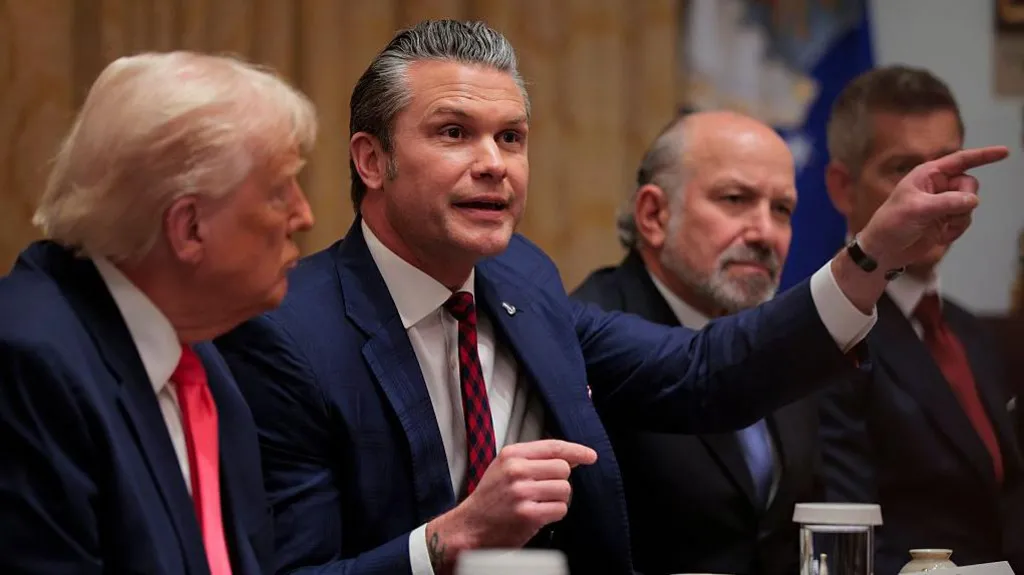
US Defense Secretary Pete Hegseth has said he did not personally see survivors before a deadly follow-up strike was launched on a suspected drug smuggling vessel in the Caribbean, an incident that has raised legal and ethical questions in Washington. The 2 September strike reportedly left two survivors clinging to the burning wreckage after the initial blow, before a second strike was ordered that killed them.
The case has drawn scrutiny from both Republican and Democratic lawmakers, who worry the operation may have violated international laws governing armed conflict. During a cabinet meeting at the White House, Hegseth described the situation as chaotic and said the “fog of war” made it difficult to assess what was happening in real time.
Hegseth told reporters he had watched the first strike live but quickly turned his attention to another meeting. “I did not personally see survivors,” he said. “That thing was on fire and it exploded. You can’t see anything. This is called the fog of war.” He said he learned a few hours later that Admiral Frank Bradley had authorised a second strike to sink the vessel, calling it the “correct decision.”
President Donald Trump also defended Admiral Bradley but said the White House had not known about the follow on strike at the time. “And I can say this: I want those boats taken out,” Trump added, maintaining that the broader campaign of maritime strikes has sharply reduced drug trafficking, though he provided no evidence.
The Washington Post first reported on the second strike, prompting immediate concern in Congress. The Senate Armed Services Committee has pledged “vigorous oversight” and has called for a full accounting of what occurred. Admiral Bradley, who led Joint Special Operations Command during the September strike and was later promoted to head US Special Operations Command, is expected to appear on Capitol Hill this week.
More than eighty people have been killed in a wave of US maritime strikes across the Caribbean and Eastern Pacific since early September. The Trump administration has framed the operations as acts of self defence intended to disrupt drug smuggling networks and protect American lives. Critics, however, say some strikes may have crossed legal boundaries.
International law experts have emphasized that the Geneva Conventions prohibit deliberately targeting wounded or incapacitated combatants, requiring instead that they be captured and given medical treatment. Several specialists told the BBC they doubted the follow up strike could be justified under those standards.
The handling of information by the White House has also drawn criticism. Hegseth initially dismissed the Washington Post’s reporting as “fabricated, inflammatory, and derogatory,” only for officials later to confirm that a second strike did occur. His subsequent remarks on the “fog of war” have deepened calls for transparency.
Since the early September operations, the US has expanded its military presence in the region. Trump said on Tuesday that similar strikes could soon take place on land as well, signaling an escalation in the campaign.