Latest News
UN Warns Global Water Crisis Nears Point of No Return

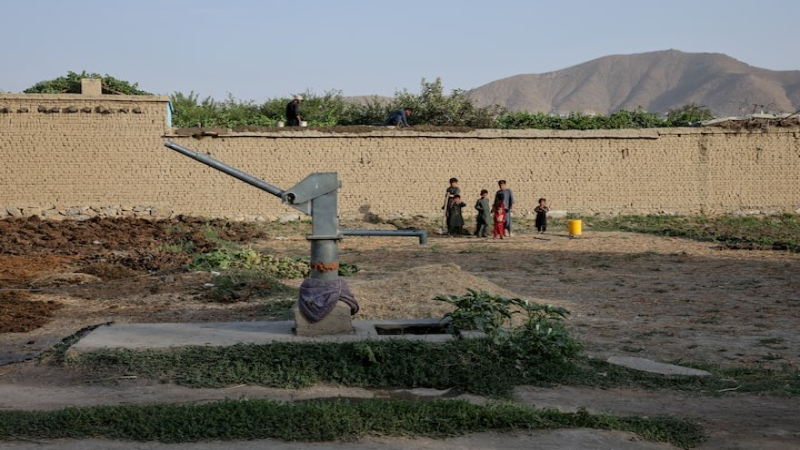
The world is approaching a severe water supply crisis that threatens billions of people and carries growing economic and social risks, according to a new assessment by the United Nations University Institute for Water, Environment and Health. Researchers warn that decades of overuse, pollution, and poor management have pushed many water systems beyond sustainable limits, leaving communities increasingly exposed to shortages. Nearly three-quarters of the global population now live in countries classified as water insecure, while around four billion people face acute scarcity for at least one month each year. The report describes this situation as a form of water bankruptcy, where natural reserves stored in rivers, aquifers, glaciers, and wetlands have been depleted faster than they can recover, undermining long term stability for households, agriculture, and industry.
According to the findings, water stress is already reshaping food production and land use across large parts of the world. More than 170 million hectares of irrigated farmland are under high or very high water stress, an area larger than many major economies. Researchers estimate that the combined economic damage linked to groundwater depletion, land degradation, and climate impacts now exceeds hundreds of billions of dollars annually. Around three billion people and more than half of global food output are concentrated in regions where water storage levels are unstable or declining. Salinisation caused by over extraction and poor drainage has also degraded vast areas of cropland, further weakening food security at a time of rising demand.
The report argues that traditional approaches to water management are no longer adequate and calls for a shift away from attempts to restore past conditions. Instead, researchers say governments and institutions must adopt a new global water agenda focused on limiting damage and adapting to long-term scarcity. Lead author Kaveh Madani said many regions are living beyond their hydrological means and that recognising the reality of water bankruptcy is essential to making difficult policy choices. Without coordinated action, the strain on water systems is expected to intensify, increasing risks to public health, economic growth, and political stability in vulnerable regions.
Some experts say the analysis highlights urgent issues but does not fully address all underlying drivers. Jonathan Paul, a geoscience professor at Royal Holloway, University of London, noted that uneven and rapid population growth plays a significant role in worsening water stress but receives limited attention in the report. As climate change accelerates and demand continues to rise, pressure on finite water resources is likely to increase further. The warning adds to a growing body of evidence that water scarcity is becoming a central global challenge with implications extending far beyond environmental policy alone.