Business
UK house prices dip as Iran war fears weigh
UK house prices are slipping as Iran war uncertainty and higher mortgage rates cool demand. Analysts weigh what comes next for the UK housing market.

UK Housing Market Feels the Heat
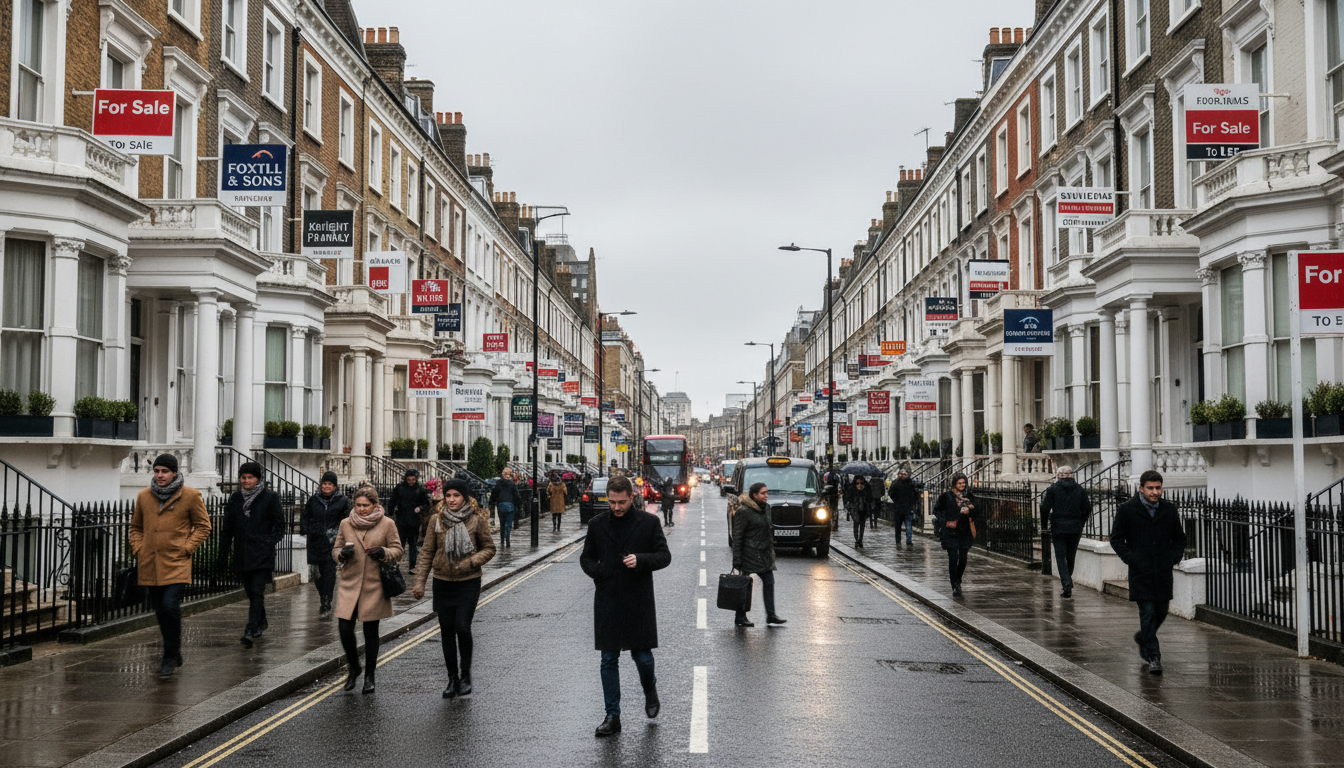
UK house prices moved lower as buyers and sellers reacted to a harsher mix of borrowing costs and geopolitical nerves. Today, estate agents report weaker viewing volumes, longer negotiation cycles, and more price reductions on homes that would have sold quickly earlier in the year. The immediate pressure is visible in tighter affordability tests and a more cautious approach from would be movers, particularly in commuter belts where recent gains had been strongest. Live market conditions show vendors are increasingly accepting smaller offers to secure chains before summer. The shift is not a collapse, but it is a clear cooling phase that is reshaping expectations street by street and forcing more realistic pricing.
Impact of Rising Mortgage Rates
Higher mortgage rates are hitting demand through monthly payments rather than headline prices, and lenders are pricing risk carefully as economic data remains mixed. The consequence is that buyers with smaller deposits face the sharpest squeeze, while remortgagers rolling off fixed deals are delaying moves to protect cash flow. An Update from brokers has pointed to rising use of longer fixes and larger down payments where possible, but that adjustment takes time and reduces transaction speed. In the background, risk sentiment has been choppy across markets, reflected in energy and crypto moves tied to the conflict, with one related read on Iran-linked market disruptions illustrating how quickly uncertainty can spread across asset classes. Today, that caution is translating into fewer aggressive bids on property.
Geopolitical Tensions and Economic Uncertainty
The Iran war impact is filtering into the UK housing market mainly through confidence and inflation expectations, with households wary of fuel and utility costs rising again if supply routes tighten. Live coverage of the conflict has kept volatility elevated, and that matters because housing decisions are among the largest and least flexible commitments most families make. A fresh Update in economic commentary has highlighted that even the perception of renewed inflation can delay rate cuts and keep mortgage pricing higher for longer. In London and the South East, where budgets are already stretched, the geopolitical premium shows up as buyers choosing smaller homes, wider search areas, or pausing to preserve savings. The result is a demand dip that is as psychological as it is financial.
Analysts’ Predictions and Expert Insights
Analysts are converging on a base case of modest further price softness rather than a sharp correction, because employment remains resilient and supply is still constrained in many areas. However, the distribution is uneven: discretionary movers in higher priced postcodes are more exposed to mortgage sensitivity, while lower priced regions depend more on wage growth and credit availability. A widely read briefing from BBC News reporting on the latest UK housing signals has stressed that shifts in sentiment can turn quickly when rate expectations change. Separately, market watchers citing propertywire.com note that agreed sale prices are increasingly being renegotiated after surveys and valuations, implying a tougher final mile for deals. The key insight is that the market is clearing, but at lower momentum and thinner margins.
What Homebuyers Can Expect Next
For homebuyers, the near term is likely to feel slower but more negotiable, with sellers prioritising certainty and chain stability over last year’s peak pricing. Buyers with strong deposits and clean paperwork should find more room to agree incentives, especially on homes that have lingered on portals. The most probable path is a gentle rebalancing: fewer bidding wars, more conditional offers, and a stronger focus on energy efficiency and running costs. An Update from lenders on product pricing will be central, because even small moves in mortgage rates alter affordability more than small changes in sticker prices. Live conditions also suggest that regional variations will widen, with inner London behaving differently from outer boroughs and towns where transport costs are a bigger share of budgets. Overall, UK house prices appear set to edge by fundamentals rather than headlines, rewarding patience and disciplined budgeting.