Politics
UK Farage proposes ban on mass Muslim prayers at historic sites amid growing political debate

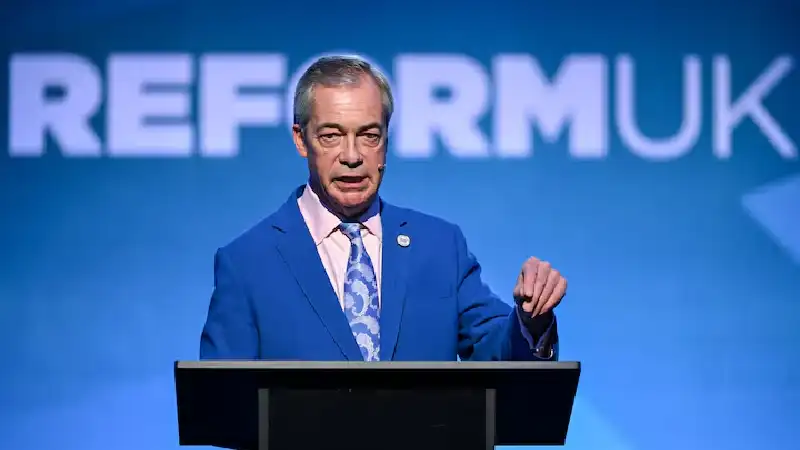
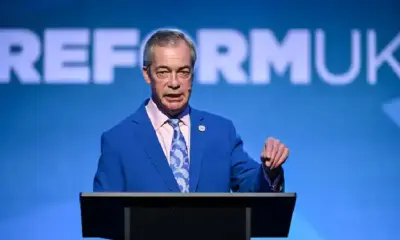
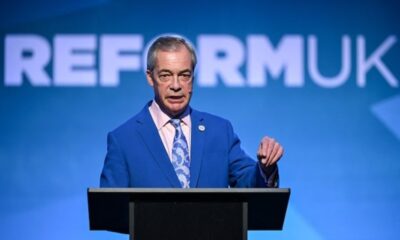
Nigel Farage has said he would move to ban large scale Muslim prayer gatherings at historic locations across Britain if he becomes prime minister, placing the issue of religious expression and public space at the centre of political debate. The Reform UK leader described a recent prayer event in central London as provocative and argued that such gatherings go beyond private religious observance. His comments come as tensions rise over how public spaces should be used for religious events, particularly in symbolic national locations that attract both locals and tourists throughout the year.
The discussion intensified following a public Ramadan prayer gathering in Trafalgar Square earlier this week that drew hundreds of participants. The event, which took place at sunset as part of iftar observances, was attended by a diverse crowd including London Mayor Sadiq Khan. Organisers said the gathering aimed to promote community unity and understanding during Ramadan. However, critics have argued that such large scale religious displays in prominent public spaces can create political and cultural tensions, especially when they occur at sites closely tied to national identity and heritage.
Farage has positioned his proposal as a measure to maintain what he describes as balance in public life. He said that while individual prayer should always be protected, large organised gatherings in historic settings risk becoming demonstrations rather than acts of faith. He also pointed to examples in some Middle Eastern countries where public religious gatherings are regulated, suggesting that Britain should consider similar limits in certain contexts. His stance reflects a broader political narrative that questions how multicultural expression should coexist with traditional national symbols.
The remarks have drawn strong reactions from across the political spectrum. Prime Minister Keir Starmer criticised earlier comments from other politicians describing the event as divisive, emphasising that Britain has a long tradition of religious tolerance. He noted that public spaces such as Trafalgar Square have hosted a wide range of religious and cultural gatherings over the years, including Christian, Jewish and Hindu events. Supporters of the Ramadan gathering have argued that the peaceful nature of the event demonstrates the inclusive character of modern Britain rather than any attempt to assert dominance.
The issue comes at a time when Reform UK is gaining traction in national opinion polls, strengthening Farage’s position as a significant political figure ahead of the next general election expected by 2029. His party has focused heavily on themes such as national identity, immigration and cultural integration. By raising concerns about public religious gatherings, Farage appears to be targeting voters who feel that traditional British values are being challenged by rapid social change. Analysts say the topic could become a key campaign issue as parties seek to define their positions on identity and public life.
Public reaction remains mixed as the debate continues to unfold. Some residents and community leaders have defended the right to hold inclusive events in shared public spaces, arguing that visibility of different cultures fosters understanding and cohesion. Others have expressed concern that large gatherings tied to specific religious groups could lead to social divisions if not carefully managed. Experts note that Britain’s legal framework strongly protects freedom of religion, meaning any attempt to impose restrictions would likely face significant legal and political scrutiny.
As political parties respond to the controversy, attention is now turning to how future policy proposals might address the balance between religious freedom and the preservation of historic sites. Local authorities and event organisers are also expected to review guidelines for public gatherings to ensure that they remain inclusive while respecting the cultural significance of major landmarks. With the debate gaining momentum, it is likely to remain a prominent issue in the national conversation over the coming months.