Business
UK Economy Enters Vibes Based Recovery as GDP Flatlines but Vibes Improve

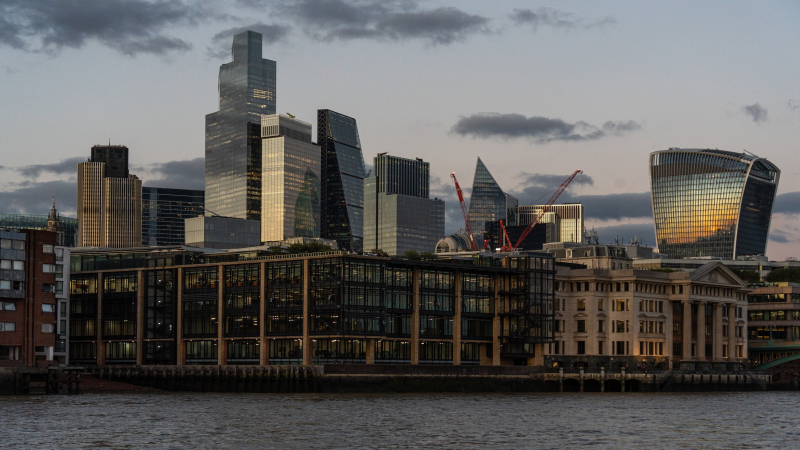
The UK economy has opened 2026 in a state that feels unfamiliar but not entirely unwelcome. Growth has not accelerated, productivity gains remain limited, and household budgets are still under pressure. Yet across markets, offices, and trading desks, the mood has softened. The anxiety that dominated recent years has eased, replaced by cautious confidence that conditions are no longer deteriorating.
This shift has not been driven by strong economic data. Instead, it reflects a period of relative calm. Inflation is no longer surging, interest rates appear closer to a peak than a climb, and businesses are adjusting to a slower but more predictable environment. In London, where sentiment often moves ahead of statistics, that stability is being interpreted as progress.
Stability becomes the new growth signal
The most important change in the current economic phase is not what has improved, but what has stopped getting worse. GDP growth remains flat, but the absence of negative surprises has altered behaviour. Companies are no longer operating in crisis mode, and investors are no longer pricing in constant disruption.
Stability has allowed businesses to plan again. Hiring decisions, capital spending, and expansion strategies are being revisited, even if cautiously. This is particularly visible in professional services, finance, and technology support sectors, where predictability matters more than rapid growth.
For the UK economy, this marks a transition away from shock management toward adjustment. That shift alone has lifted confidence, even without headline growth figures to support it.
Markets respond to predictability rather than optimism
Financial markets have reflected this calmer tone. Equity performance has been selective rather than broad, with investors favouring firms that offer steady earnings over high risk growth stories. Volatility has declined, and sudden swings driven by macro headlines have become less frequent.
This behaviour suggests that investors are not expecting a rapid rebound, but they are no longer positioning for downturn scenarios. Capital is flowing into assets perceived as resilient rather than speculative, reinforcing the sense that stability itself has value.
Retail investment activity has also become more measured. The enthusiasm of earlier cycles has been replaced by a focus on income, balance sheets, and long term positioning.
Monetary policy sets the tempo
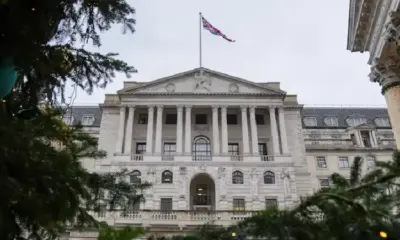
The approach of the Bank of England continues to shape expectations. Policymakers have signalled patience, emphasising data dependence and gradual adjustment rather than decisive moves. This has reassured markets that policy shocks are unlikely in the near term.
While interest rates remain restrictive, the lack of aggressive tightening has reduced uncertainty. Businesses can model costs with greater confidence, and lenders are operating in a more predictable environment. This does not guarantee growth, but it reduces the fear that previously froze decision making.
In London, where monetary signals are closely watched, consistency in policy messaging has contributed to the broader improvement in sentiment.
Cost pressures still anchor reality
Despite improving confidence, structural pressures remain. Housing costs continue to absorb wage gains, limiting consumer spending and mobility. For many households, financial conditions feel stable but tight, with little room for discretionary expansion.
This constraint explains why the recovery remains psychological rather than economic. Businesses are cautious not because they expect deterioration, but because demand remains constrained. Until household balance sheets improve meaningfully, growth is likely to remain subdued.
Still, the shift from contraction to adaptation matters. Companies are focusing on efficiency, flexible staffing, and targeted investment rather than retreat.
Conclusion
The current phase of the UK economy is not a traditional recovery driven by output or productivity gains. It is defined by improved confidence, reduced volatility, and the belief that conditions have stabilised. That belief is shaping behaviour across markets and businesses.
If stability persists, confidence may gradually translate into growth. Until then, the economy remains in a holding pattern, supported by calmer expectations rather than strong fundamentals. In London, that change in tone is already influencing how businesses plan for the year ahead.