
News
Thousands Flee Thai Cambodia Border After Deadly Clashes as Tensions Reach New Peak

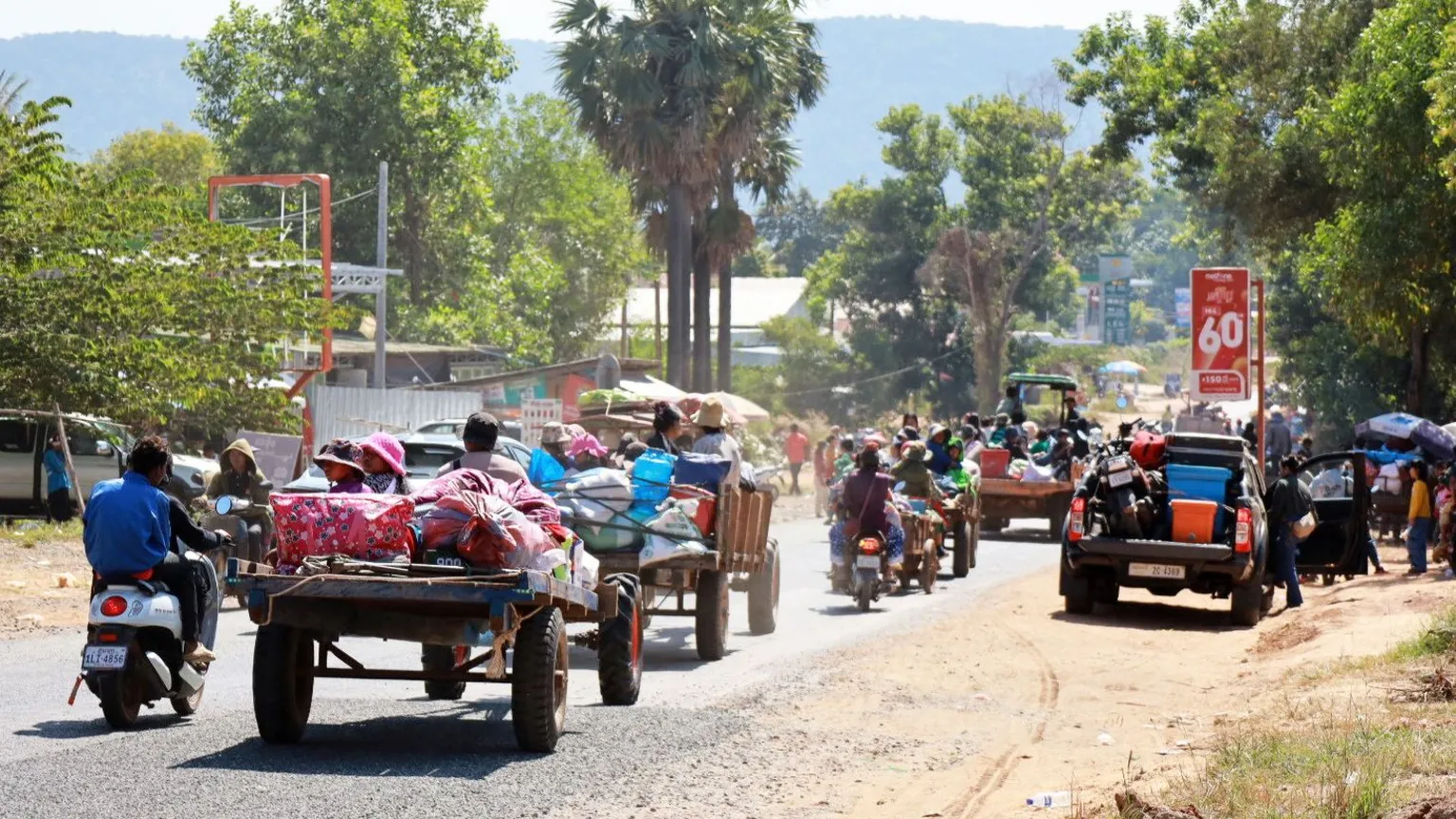
Thousands of residents along the Thai Cambodia border fled their homes on Monday as a new wave of clashes erupted between the two countries, leaving at least five people dead and raising fears of a broader escalation. The violence marks the most serious confrontation between Thailand and Cambodia since a ceasefire was agreed in July, and both sides continue to accuse the other of triggering the latest round of fighting.
Thai Prime Minister Anutin Charnvirakul said Thailand never sought conflict but would use necessary means to defend its sovereignty. His comments came after the Thai army announced that its forces had responded to Cambodian fire in Ubon Ratchathani Province, including launching air strikes along disputed border areas. Cambodian officials, however, strongly denied this version of events. The defence ministry in Phnom Penh said Thai forces had attacked first in Preah Vihear province, prompting their troops to retaliate.
Former Cambodian leader Hun Sen added to the heated rhetoric by accusing what he described as Thai invaders of provoking the confrontation. The exchange of accusations reflects the deep mistrust that has steadily grown between the neighbours in recent months. Since May, tensions have escalated significantly, resulting in more than forty deaths, the imposition of import bans and new travel restrictions that have disrupted life and commerce along the border.
Monday’s violence resulted in the deaths of at least one Thai soldier and four Cambodian civilians, according to officials from both countries. Around a dozen others were reported injured, including residents caught in the crossfire. As fighting intensified, families on both sides of the border packed their belongings and fled to safer areas, leaving behind homes and livelihoods. Local authorities are now working to accommodate the displaced in makeshift shelters, though concerns remain about food supplies, medical care and continued safety.
Among those sounding the alarm about the effects of the conflict is Thai teacher Siksaka Pongsuwan, who warned that the clashes are creating many unseen victims. He explained that children living in the border region are losing opportunities compared with peers in more peaceful cities. Frequent school closures, unsafe conditions and emotional trauma have left many young people struggling to continue their education. He added that even if fighting stops, rebuilding stability and confidence among students might take years.
The disputed border area has been a flashpoint for decades, particularly around the historic Preah Vihear temple complex. Although international rulings have attempted to clarify ownership, armed patrols, military outposts and nationalist sentiment have repeatedly contributed to violent flareups. Analysts say the current surge in tensions appears to be the most dangerous in years, in part because both governments are under pressure to demonstrate strength at home.
Humanitarian groups are calling for an immediate halt to hostilities and urging both sides to return to dialogue. For the thousands of families now displaced and uncertain about when it might be safe to return home, the hope is that leaders will choose negotiation over confrontation before the situation deteriorates further.



