
News
Seven stand trial in Germany over violent attacks linked to extreme left group Antifa Ost

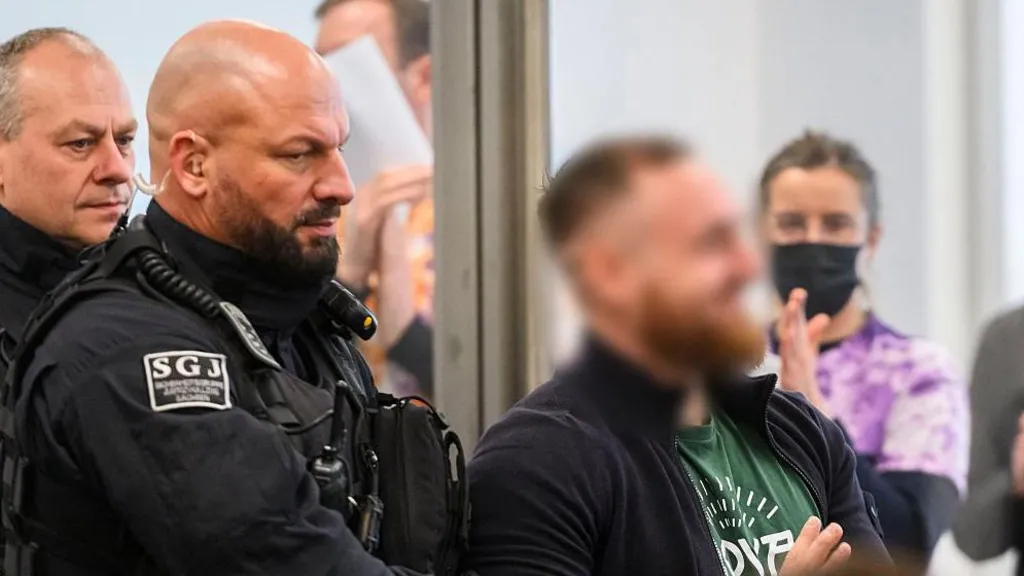
Seven people have gone on trial in Dresden, eastern Germany, accused of involvement in a violent far left extremist group known as Antifa Ost, or the “hammer gang”. Prosecutors say the group, active since late 2017 or early 2018, carried out a series of assaults on individuals they believed to be associated with right wing movements in Germany and in Budapest, Hungary.
The defendants, six men and one woman, have been identified only by their initials in accordance with German privacy rules. They face charges including attempted murder, aggravated assault and property damage. Prosecutors allege the group planned its attacks with a high level of preparation, which included conducting surveillance on targets and coordinating timing and escape routes. Several victims were seriously injured, with some suffering blows from hammers, batons and other heavy tools.
One of the accused, Johann G, is alleged to have played a central role in organising the group’s activities. Prosecutors say he helped plan attacks and recruit new members. Another defendant, Paul M, is accused of arranging combat training sessions to prepare members for violent confrontations.
In one incident described in court, Johann G and Tobias E, along with others, allegedly assaulted four people at Dessau Rosslau train station in January 2019. The victims had just attended a rally marking the anniversary of the World War Two bombing of Magdeburg. Prosecutors say the attackers struck the victims on the head with hammers and iron bars, continuing to hit and kick them even after they had collapsed. Another victim in a separate attack received at least fifteen blows, mainly to the head, from batons, pepper spray and a hammer.
The case has drawn additional attention because the United States recently designated Antifa Ost as a terrorist organisation. The designation means members are barred from entering the US, their assets can be frozen and providing material support to them is considered a criminal act. The move was part of a broader American effort to target far left extremist groups.
The far right Alternative for Germany party welcomed the US designation and urged the German government to take similar steps. AfD politician Stephan Brandner argued that German authorities had failed to act against what he described as a dangerous extremist organisation and called for stronger measures to counter all forms of political violence.
German officials have not commented on whether they plan to follow the US example, but the trial in Dresden is expected to shed further light on the scope of Antifa Ost’s activities and the level of coordination behind the attacks. The proceedings are likely to continue for several months as the court examines evidence and hears testimony from investigators and victims.



