News
Pregnant commuter says Tube passengers rarely offer seats as TfL marks Baby on Board milestone

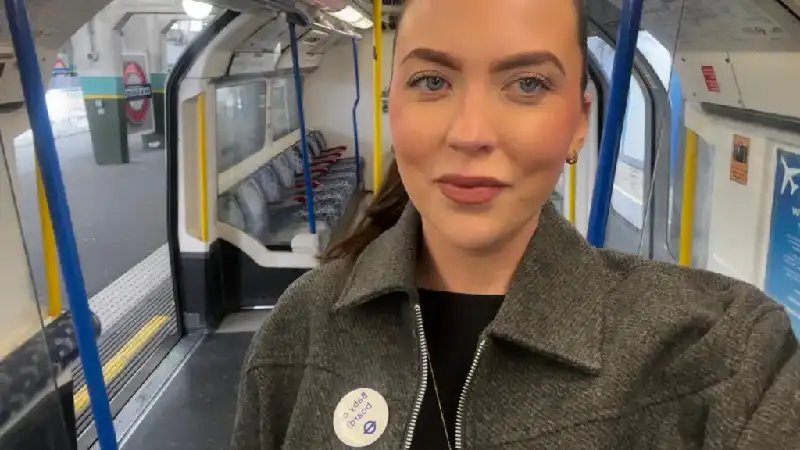
A London commuter has raised concerns about a lack of awareness among Tube passengers after saying she has rarely been offered a seat during her pregnancy. Hannah Emberton, who is six months pregnant, said she can count on one hand the number of times fellow passengers have given up their seats despite her wearing a Baby on Board badge. Her comments come as Transport for London marks the twentieth anniversary of the scheme, which was introduced to help pregnant women travel more comfortably across the capital’s transport network.
Emberton, 28, from Camden, said she regularly uses the Tube several times a week and takes steps to increase her chances of finding a seat. She explained that she often waits for less crowded trains or positions herself strategically on platforms to access quieter carriages. Despite these efforts, she said it remains difficult to secure a seat, even when displaying the badge designed to signal that assistance may be needed. She believes that many passengers are too distracted by mobile devices to notice those who may require support.
The Baby on Board badge was first introduced following research that found many pregnant passengers were left standing for extended periods during journeys. Early findings showed that a significant number of women were either offered seats only after several stops or not at all. Since its launch, tens of thousands of badges have been distributed annually in an effort to improve awareness and encourage courtesy among passengers. However, Emberton’s experience suggests that challenges remain in translating awareness into action.
Transport officials acknowledged the issue and emphasized the importance of social responsibility when using public transport. Authorities noted that while priority seating is clearly marked for those who need it, the responsibility to offer a seat extends to all passengers regardless of where they are sitting. Officials encouraged commuters to remain alert to their surroundings and be mindful of individuals who may not always feel comfortable asking for assistance directly.
Emberton said she often hesitates to ask for a seat due to concerns about negative reactions from other passengers. She added that the discomfort of requesting help can make already stressful journeys more difficult. Her experience highlights a broader issue around passenger etiquette and the need for greater awareness in busy urban environments. Advocates say small acts of consideration can make a significant difference, particularly for those who may be less able to stand for long periods.
To mark the anniversary of the scheme, Transport for London has introduced an updated version of the badge, including a new design for women expecting multiple births. Officials hope the refreshed initiative will renew public attention and encourage more passengers to offer assistance when needed. The campaign aims to remind commuters that simple gestures of awareness and courtesy can improve the travel experience for vulnerable passengers across the network.