News
Nigeria’s defence minister resigns for health reasons as mass kidnapping crisis intensifies

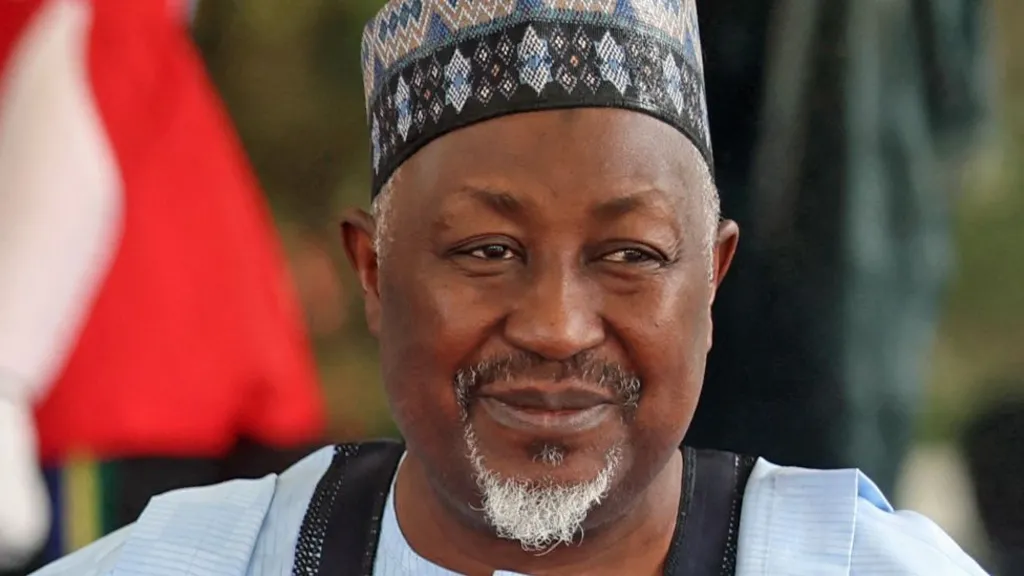
Nigeria’s Minister of Defence, Mohammed Badaru Abubakar, has stepped down from his position with immediate effect due to health concerns, the presidency announced on Tuesday. His resignation comes at a time of mounting security challenges across the country, particularly a surge in mass kidnappings that has placed intense pressure on the government.
The announcement follows a warning last week from the office of the United Nations High Commissioner for Human Rights, which reported that at least 402 people, most of them schoolchildren, have been kidnapped since mid-November. The wave of abductions has shaken communities and raised fears about the ability of security agencies to respond effectively.
President Bola Tinubu has nominated retired General Christopher Musa to take over the defence portfolio. Musa, 58, is widely viewed as one of Nigeria’s most seasoned military commanders. He previously served as chief of defence staff from June 2023 to October 2025 and is particularly known for his leadership in counterinsurgency operations against jihadist groups in the northeast.
The latest instances of insecurity underline the scale of the problem. On Sunday, gunmen abducted around 20 people in two separate raids in the north, including a Christian pastor and a Muslim bride along with her bridesmaids. In central Niger state, some 250 schoolchildren and 12 teachers from a Catholic school remain missing following one of the largest mass kidnappings in recent weeks.
It remains unclear who is behind the attacks. Many analysts believe criminal gangs seeking ransom payments are responsible, while a presidential spokesperson told the BBC that the government suspects jihadist groups may be involved. The uncertainty has added to public anxiety and intensified calls for a stronger security response.
Abubakar, who previously served two terms as governor of Jigawa state, was appointed defence minister in August 2023. Although the nature of his health issues has not been disclosed, he wrote to President Tinubu to formally tender his resignation. Tinubu accepted the decision and expressed gratitude for Abubakar’s service to the nation.
The president has declared a national security emergency and plans to recruit about twenty thousand new police officers to expand the force to roughly fifty thousand. Nigeria faces a complex security landscape that includes kidnappings for ransom, jihadist violence in the northeast, separatist tensions in the southeast and recurring clashes between farmers and herders in central regions. Experts say poor intelligence sharing, corruption, and inadequate local policing have hindered efforts to address these problems.
Nigeria’s Senate is expected to begin confirmation hearings for General Musa soon. If approved, he would oversee what is being described as one of the most ambitious security overhauls in decades.
Meanwhile, international attention to Nigeria’s security crisis continues to grow. The United States House Committee on Appropriations is holding a high-level roundtable on allegations of Christian persecution in Nigeria. Committee chairman Tom Cole said the US would not ignore reports of violence. Earlier in November, President Donald Trump threatened possible military intervention if attacks on Christians continued. Nigerian officials have stressed that both Muslim and Christian communities have been targeted by armed groups.
Last week, Nigeria’s National Security Adviser Mallam Nuhu Ribadu led a delegation to Washington for discussions. Both sides agreed to establish a joint working group to strengthen defence and security cooperation.