Politics
King Charles Photo With Caribbean Leaders Under Slavery Linked Portrait Triggers Backlash in London

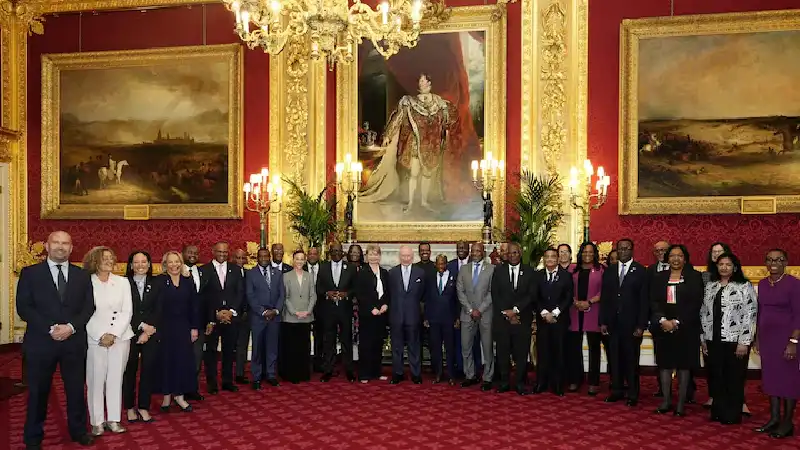
A photograph of King Charles with Caribbean officials at a Commonwealth Day reception in London has sparked renewed criticism of the British monarchy’s historical links to slavery, after it emerged the group was positioned beneath a portrait of King George IV, a monarch associated with wealth derived from enslaved labor. The image, taken at St James’s Palace earlier this month, has circulated across official accounts and drawn strong reactions from scholars, campaigners and members of the Caribbean community who argue it highlights unresolved tensions around colonial history and royal accountability.
The reception brought together foreign ministers and diplomats from several Caribbean nations including Jamaica, Trinidad and Tobago and St Kitts and Nevis, alongside senior British officials. Grenada’s high commissioner to the United Kingdom was also present among a group of around 29 guests who posed for the widely shared photograph. While the event itself was part of ongoing diplomatic engagement within the Commonwealth, the setting of the image has become the central point of controversy, shifting attention away from policy discussions to questions of symbolism and historical sensitivity.
Researchers and historians have pointed to documented links between King George IV and income generated from Caribbean estates where enslaved people were forced to work during the eighteenth and nineteenth centuries. Financial records suggest that funds from these estates contributed to royal income, reinforcing longstanding concerns about how deeply the monarchy benefited from the transatlantic slave trade. Critics argue that the presence of this portrait during a modern diplomatic gathering with Caribbean representatives demonstrates a lack of awareness about the emotional and political weight such imagery carries in a post colonial context.
Voices from the Caribbean and academic circles have described the moment as deeply insensitive, with some calling it a diplomatic oversight that risks undermining trust between the monarchy and former colonies. Reparations advocates have said the image reflects a broader issue of historical acknowledgment, urging British institutions to take clearer steps toward addressing the legacy of slavery. Scholars have also warned that such incidents can appear to normalize the past rather than confront it, especially when they occur during high profile events intended to strengthen international relationships.
The controversy comes amid growing debate about the role of the monarchy in acknowledging its historical involvement in slavery and colonial exploitation. King Charles has previously expressed sorrow over the legacy of slavery and has supported academic research examining the royal family’s connections to the trade. Past investigations have revealed financial ties between earlier monarchs and companies involved in transporting enslaved Africans, adding pressure on the royal household to engage more directly with calls for transparency and potential reparative measures.
The latest criticism also reflects a wider shift in how historical narratives are being reassessed across Europe and the Caribbean. Governments and cultural institutions have increasingly faced demands to reevaluate monuments, symbols and public records linked to colonial exploitation. Within this context, even ceremonial settings such as palace receptions are being scrutinized for how they represent history and whether they align with contemporary expectations of accountability and respect for affected communities.
Despite the backlash, there has been no immediate official response addressing the concerns raised by campaigners and experts. The image continues to circulate online, fueling discussion about how the monarchy should approach its historical legacy moving forward. Observers note that the incident may intensify calls for a formal apology or more concrete actions from the royal family, particularly as Caribbean nations continue to examine their relationship with the British Crown and consider future constitutional changes.