Tech
How Ground Robots Became a Lifeline for Ukrainian Troops in the Eastern Kill Zone

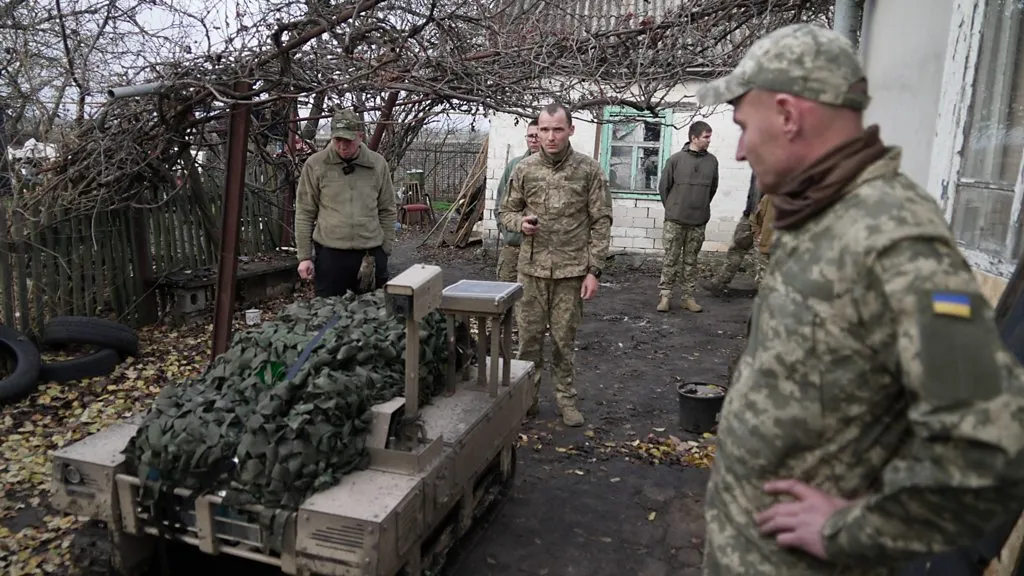
In the middle of a pitch black night on the eastern front of Ukraine,, a soldier leans into his radio and whispers that the toy has been delivered. The word toy is a code name for a device that is anything but playful. He and his partner move quickly to unload it from their van because every extra second risks drawing the attention of Russian drones circling above. In this part of the front lines speed and silence mean survival.
What the Ukrainian robot really is
The so-called toy is an unmanned ground vehicle, a compact tracked robot that has become essential to Ukrainian troops fighting in Pokrovsk and Myrnograd. Russian forces are attempting to sever supply routes leading into the region, which makes every delivery mission incredibly dangerous. Without steady access to food, ammunition, and medical supplies, Ukrainian soldiers positioned near the front would soon face the intolerable choice of giving up ground or attempting a retreat under fire.
Why humans cannot make the journey safely
Kyiv has deployed special forces elite fighters and experienced drone units to reinforce positions around Pokrovsk but the situation remains extremely difficult. Roads into the city are constantly watched and attacked which means sending in armoured vehicles is nearly impossible. These vehicles are easy targets and would likely be destroyed long before reaching their destination. Carrying heavy supplies on foot is equally risky since Russian drones and artillery constantly scan for movement.
Robots step in where humans cannot
This is where land drones have changed the battlefield. Pokrovsk may go down in history as one of the first major battles where robots were used on a large scale not to fight but to transport crucial supplies and evacuate wounded soldiers. The unmanned vehicles are small enough to fit into a narrow bike lane and resemble a tiny tank without a cannon. They move low to the ground and are difficult for enemy forces to detect. Unlike aerial drones they are harder to jam and their operators can control them from safer positions far from direct fire.
A massive shift in frontline logistics
Ihor who oversees unmanned systems for the 7th Corps says these robots now deliver roughly ninety percent of all supplies to frontline troops in Pokrovsk. Their arrival represents a complete shift in how the Ukrainian army keeps its soldiers alive in one of the most dangerous areas of the conflict. While the machines do not remove the danger entirely they dramatically reduce the number of soldiers forced to make deadly journeys across exposed terrain.
Life inside the kill zone
The region is widely known as the kill zone a thirty kilometre stretch where almost anything that moves is targeted by drones artillery mortar fire or aerial bombs. Both Ukrainian and Russian forces constantly monitor the area from above which means any detectable motion often leads to a strike within seconds. This is the environment that military doctor Vitsik and land drone operator Auditor work in every day. These call signs protect their real identities and reflect the constant risk surrounding their missions.
A narrow escape under relentless fire
Last month the pair attempted to evacuate wounded soldiers from Pokrovsk. As soon as they moved they were spotted and forced to sprint toward a building for cover as Russian drones began to descend. Vitsik remembers the experience clearly. One drone would explode on the ground and almost immediately another would appear. At the same time artillery and mortar rounds landed nearby shaking the walls around them. The barrage lasted nearly an hour before they managed to slip into a neighbouring house and find a way out. Their survival underscores why unmanned ground vehicles have become a lifeline in a place where every movement is a gamble.