
Business
How Fracking Transformed an Argentine Town and What It Means for the Country

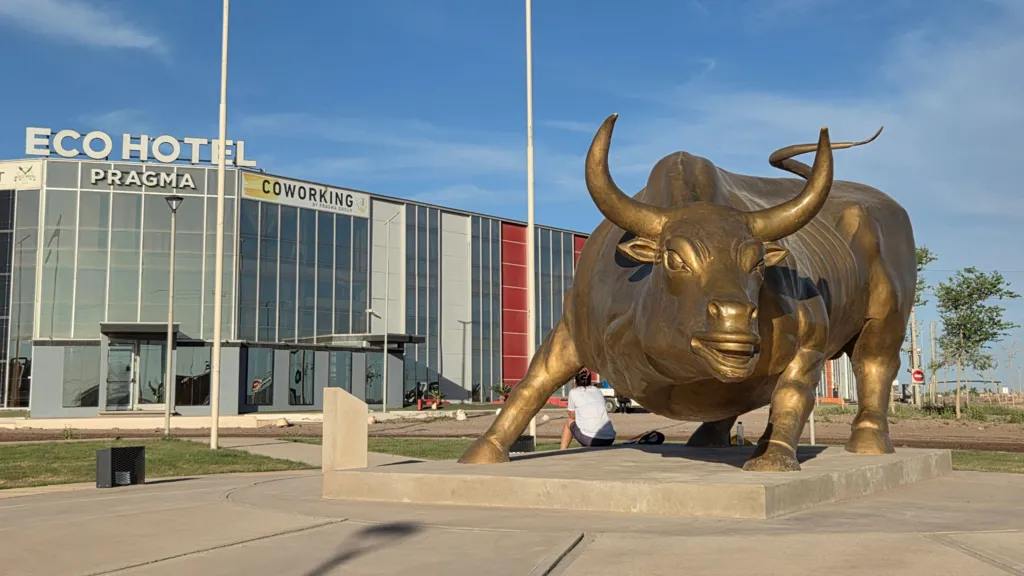
When mechanic Fabio Javier Jiménez looks at the busy streets of his hometown today, he still finds it hard to believe how much everything has changed. His family’s tyre repair shop moved to the remote Argentine town of Añelo years ago, at a time when few people imagined it would one day sit at the centre of a national energy boom. Back then, Añelo was a quiet settlement far from the bustle of Buenos Aires, with barely any basic infrastructure. Power cuts were common, and households lived without steady water or gas connections. Yet the town’s isolation would soon make it the unexpected face of Argentina’s fracking revolution.
Everything shifted in 2014 when the region surrounding Añelo became the focus of major fracking operations. As drilling began and energy companies arrived, the once sleepy landscape rapidly transformed. Mr Jiménez remembers how their shop stood alone in the dunes, seemingly far removed from any development. Within years, the town expanded past them, bringing people, businesses, and constant movement. Añelo was no longer remote. It had become the heart of Argentina’s newest economic opportunity.
A Town Reshaped by Energy Wealth
The effect of fracking on Añelo is visible in every part of daily life. The population rose from just over ten thousand residents in 2010 to nearly eighteen thousand by 2022. This growth of more than sixty percent does not even include the thousands of temporary workers who stay in the town each night. About fifteen thousand industry employees sleep in Añelo on an average evening, turning it into a lively hub where hotels, rental units, and roadside businesses operate at full speed.
Traffic has also surged. Official figures show that nearly twenty-five thousand vehicles entered the town every day last year, and more than six thousand of these were large lorries transporting equipment, supplies, or oil. For tyre repair shops like the one run by the Jiménez family, this constant flow of vehicles means a steady stream of customers and an entirely new rhythm of work. What was once a quiet roadside shop is now part of one of the busiest routes in the region.
Añelo’s location explains much of this transformation. It sits at the centre of Vaca Muerta, a vast geological formation covering about thirty thousand square kilometres. Although its oil and gas potential was first identified in 1931, Argentina did not have a way to fully develop the site until fracking was legalised in 2014. Once the technology became available, everything changed.
Fracking involves injecting a high pressure mix of water, sand and chemicals deep into the earth, creating tiny fractures in the rock so oil and gas can escape to the surface. This method, widely used in the United States since the early 2000s, opened the door to commercially viable extraction in Vaca Muerta for the first time.
The Rise of Vaca Muerta’s Energy Power
The first major fracking effort in the area came through a partnership between YPF, Argentina’s largely state owned oil company, and US based Chevron. From that beginning, the industry expanded rapidly. By February this year, more than three thousand three hundred wells were in active production across Vaca Muerta. The number of oil wells and gas wells is almost evenly split, reflecting the vast deposits that lie underground.
Economists say Vaca Muerta now accounts for more than half of Argentina’s oil and gas production. Nicolás Gadano, chief economist at Empiria and a former YPF official, explains that fracked oil in this region is also cheaper to produce than oil extracted from older conventional fields. Many traditional deposits in Argentina have been used for decades and require far more effort to reach what remains.
Energy specialist Nicolás Gandini shares a similar view. He notes that Argentina has struggled to find new conventional oil fields that can compete with the output and cost efficiency of Vaca Muerta. With the exception of offshore gas fields in the south, nearly all other potential sites are significantly more expensive. This is why Vaca Muerta has become central to Argentina’s long term energy strategy.
A Local Boom with National Implications
Añelo’s rapid growth tells the story of a community transformed by opportunity. The economic benefits are visible, yet so are the challenges that come with sudden expansion, from heavy traffic to intense pressure on housing and public services. For Argentina, the rise of Vaca Muerta represents a chance to strengthen domestic energy production and reduce reliance on imported fuels. How the country manages this resource will shape its economic future for decades to come.



