News
Henry VIII Love Pendant Secured for Public Display After Centuries Lost

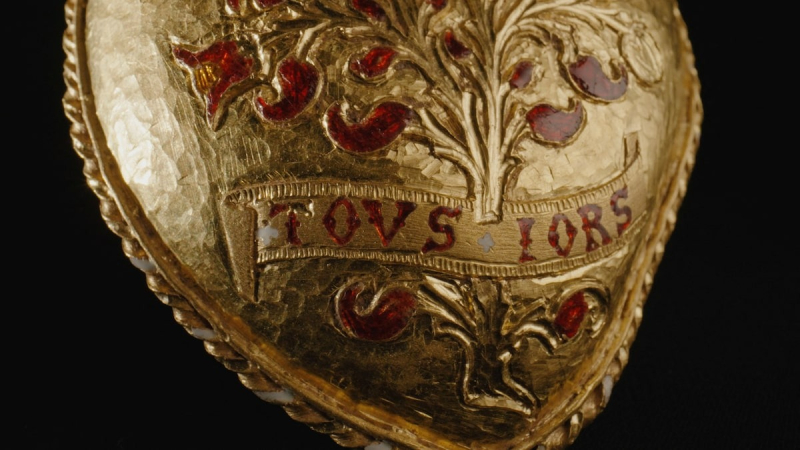
A rare gold pendant linked to King Henry VIII and his first wife Katherine of Aragon has been secured for permanent public display after being lost for centuries. The British Museum has acquired the historic object following a major fundraising effort, ensuring that the deeply personal artefact remains accessible to the public rather than disappearing into a private collection.
The Tudor era pendant is formed as a heart made from pure gold and is decorated with vivid red enamel. It bears the initials of Henry and Katherine and includes symbols closely associated with their union and dynastic ambitions, including the Tudor rose and a pomegranate tree. The pomegranate was Katherine’s personal emblem and a symbol of fertility and continuity, themes that carried immense political importance during the early years of their marriage.
The pendant is believed to be the only surviving piece of jewellery directly connected to the twenty four year marriage between Henry and Katherine. Inscribed on a small banner is the word tousiors meaning always in old French, a detail that reflects the devotion expected of royal marriages at the time. Ironically, the phrase stands in contrast to the marriage’s eventual collapse, which reshaped English history.
The object disappeared from the historical record for hundreds of years before being rediscovered in two thousand nineteen by a metal detectorist in a field in Warwickshire. Under UK treasure laws, significant finds must be reported, assessed, and offered first to museums. This process allowed the British Museum to launch a nationwide campaign to raise the funds required to secure the pendant.
The museum raised three and a half million pounds through a combination of public donations and support from heritage funding bodies. Around forty five thousand individuals contributed to the appeal, demonstrating the powerful public interest in Tudor history. As required by law, the proceeds will be shared equally between the finder and the landowner where the pendant was discovered.
Experts believe the pendant was likely created around fifteen eighteen, possibly to mark the betrothal of Henry and Katherine’s daughter Mary to the French heir. At that time, Henry and Katherine were still presenting a united royal image, despite growing anxiety over the lack of a male heir. Only a decade later, Henry’s desire for a son would lead him to seek an annulment, ultimately breaking England away from the Catholic Church and ending his marriage to Katherine.
British Museum director Nicholas Cullinan said the pendant offers a rare and intimate insight into a pivotal chapter of English history. He described it as a survivor that allows the public to connect with a lesser known emotional dimension of the Tudor court, beyond the familiar political drama.
The pendant will now form part of the museum’s permanent collection, where it will be displayed as both a work of craftsmanship and a witness to one of the most consequential royal marriages in British history.