Latest News
Fire Disrupts Key Rail Route From Euston

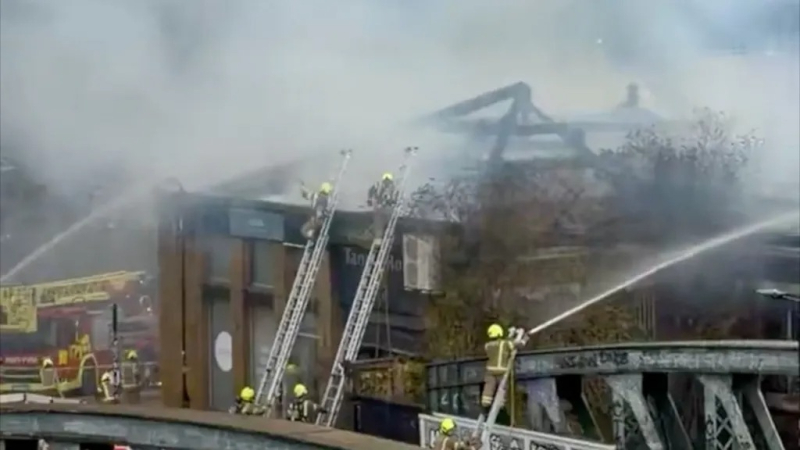
Train services on the West Coast Main Line faced significant disruption after a large fire broke out in north London, forcing partial closures between London Euston and Watford Junction and affecting long-distance journeys across the country. The blaze began mid-morning at a commercial property near Chalk Farm, close to critical railway infrastructure, leading to emergency restrictions on rail movements through the area. Passengers travelling to and from major cities, including Birmingham, Manchester, Liverpool and Glasgow, experienced delays and cancellations as congestion built up across the network. Commuters at Euston Station reported crowded concourses and constantly changing departure information, while operators worked to manage reduced capacity. Although some tracks later reopened, the incident caused a knock-on effect throughout the day, disrupting both intercity and regional travel during a busy weekday period.
Fire crews responded in large numbers, with around 70 firefighters deployed to contain the blaze and prevent further damage to nearby properties and railway assets. Flames spread through the ground floor of the affected building and damaged parts of a neighbouring structure, including a section of its roof. Several people evacuated adjacent buildings as a precaution before crews arrived, and emergency services cordoned off the surrounding area while operations were under way. The fire was eventually brought under control early in the afternoon, allowing rail engineers to begin safety checks on nearby lines and signalling equipment. Authorities confirmed there were no reports of injuries, and investigations into the cause of the fire are continuing as the site cools and access restrictions are gradually lifted.
Rail operators warned passengers to expect ongoing delays even after services began resuming, citing congestion caused by earlier suspensions and the need to carefully manage train movements through the affected section. Long-distance trains bound for London were held at stations as far north as the North West of England, while some outbound services from Euston restarted with revised timetables. Regional routes also faced intermittent disruption as operators adjusted schedules and reallocated rolling stock. Ticket acceptance was put in place across several services to help passengers complete their journeys, though travellers were advised to check live updates before setting off. Transport staff remained on hand at major stations to assist passengers and manage crowd flow during the recovery phase.
The incident once again highlighted the vulnerability of major transport corridors to unexpected emergencies in densely built-up areas of the capital. The West Coast Main Line is one of the busiest rail arteries in the UK, linking London with key economic centres, and even short disruptions can quickly ripple across the wider network. As services gradually returned to normal, rail authorities focused on restoring full reliability while balancing safety checks and operational constraints. For many passengers, the disruption meant longer journeys and altered plans, reinforcing calls for improved resilience around vital infrastructure. Normal service levels were expected to take time to fully stabilise as the effects of the morning fire continued to be felt into the evening.