News
Church of England’s First Female Archbishop Walks Historic Pilgrimage to Canterbury Ahead of Installation

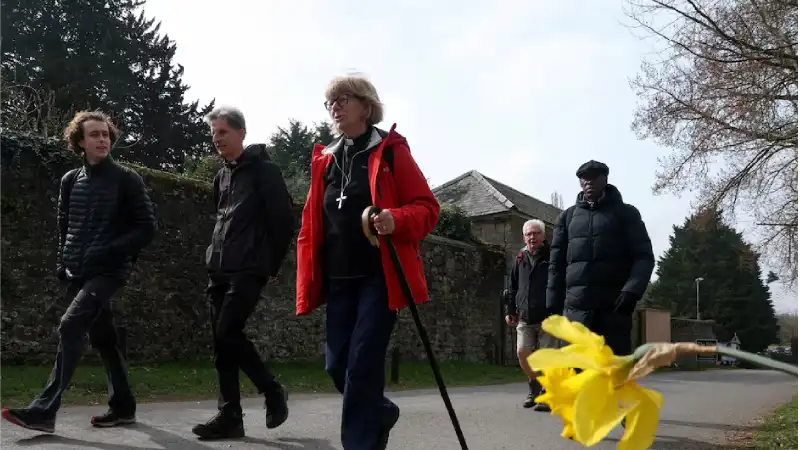
The incoming Archbishop of Canterbury has embarked on a historic pilgrimage from London to Canterbury, retracing an ancient religious route ahead of her official installation next week. Sarah Mullally, who will become the first woman to lead the Church of England, is walking approximately 140 kilometres along the traditional Becket Camino path. The journey, which spans several days, reflects both a personal spiritual commitment and a symbolic connection to centuries of religious tradition, drawing attention from communities across the country as she prepares to assume one of the most influential roles in global Anglican leadership.
The pilgrimage began at St Paul’s Cathedral in London and is set to conclude at Canterbury Cathedral, where Mullally will be formally installed. Along the way, she has followed a route that winds through historic towns, countryside paths and long established pilgrimage sites, stopping at churches and community centres to engage with local groups. Accompanied by a small group including family members and fellow pilgrims, she has taken part in services, visited schools and met congregations, turning the journey into both a spiritual reflection and a public moment of connection.
The Becket Camino holds deep historical and religious significance, tracing the path associated with Thomas Becket, a former Archbishop of Canterbury whose death in the twelfth century made the city a major pilgrimage destination. By choosing this route, Mullally is aligning her leadership with a long standing tradition within English Christianity, while also introducing a modern interpretation of faith and service. Observers say the decision to undertake such a journey before her installation marks a rare and meaningful gesture in contemporary church leadership.
Mullally’s appointment represents a significant moment for the Church of England, as she becomes the first woman to take on the role of Archbishop of Canterbury and the symbolic head of the worldwide Anglican Communion. Her leadership comes at a time when religious institutions are navigating evolving social expectations, declining attendance in some regions and ongoing debates around inclusion and reform. The pilgrimage has been seen by many as a way to signal humility, accessibility and a renewed focus on community engagement.
Throughout the journey, Mullally has described the experience as deeply humbling, emphasizing the importance of reflection as she prepares for the responsibilities ahead. The physical demands of the walk, combined with its historical resonance, have added a powerful dimension to the transition into her new role. Supporters along the route have gathered to witness parts of the pilgrimage, highlighting the continued cultural and spiritual relevance of such traditions in modern Britain.
The final stage of the journey is expected to conclude in Canterbury in time for evening prayers, leading into the formal installation ceremony scheduled for March 25. As the Church of England prepares for this landmark moment, attention remains focused on how Mullally’s leadership will shape the future direction of the institution. Her pilgrimage has already set a distinctive tone, blending tradition with a contemporary approach to faith and public service.