Business
Bank of England signals lower inflation risk despite energy shock from Middle East tensions

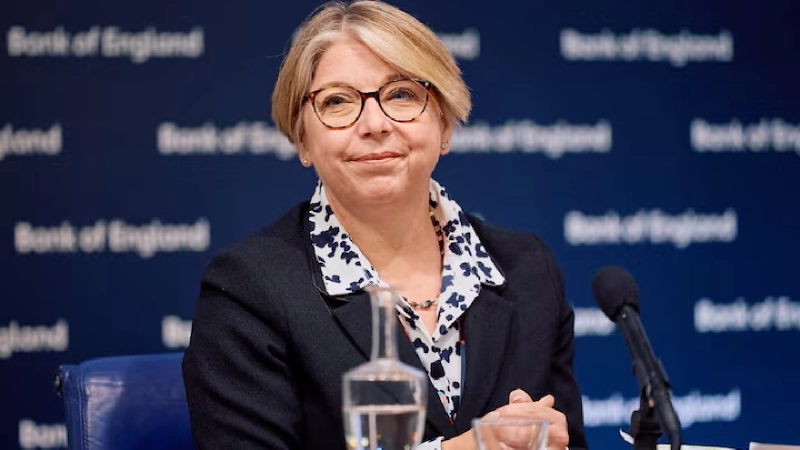
A senior Bank of England official has indicated that the latest surge in energy prices driven by geopolitical tensions is less likely to trigger sustained inflation compared to the shock experienced in 2022. Deputy Governor Sarah Breeden said current economic conditions differ significantly from the period following Russia’s invasion of Ukraine, pointing to weaker demand and a softer labour market as key factors limiting inflationary pressure. Her remarks come as policymakers assess how rising oil and gas costs linked to global conflicts could influence price stability and interest rate decisions in the months ahead.
Breeden highlighted that there is now more slack in the labour market, reducing the likelihood of strong wage growth that typically fuels second round inflation. She noted that economic activity was already subdued before the recent energy shock, which further limits the ability of businesses to pass on higher costs to consumers. This contrasts with the conditions in 2022, when tight labour markets and strong demand allowed inflation to spread more broadly across sectors beyond energy.
The official also pointed out that inflation would have been close to the Bank of England’s two percent target if not for the recent increase in energy prices. Additionally, interest rates are already at levels that restrain economic activity, providing a buffer against further inflationary pressures. These factors suggest that while energy costs may rise, their broader impact on wages and prices across the economy could remain more contained than in previous crises.
Financial markets have responded to the renewed rise in energy prices by anticipating possible interest rate increases, with expectations forming around two or three quarter point hikes. Breeden acknowledged that such reactions are understandable given recent developments, but cautioned against assuming a direct link between higher energy costs and future rate decisions. She stressed that monetary policy responses would depend on whether these price increases lead to wider inflation effects rather than the energy shock alone.
Recent movements in government bond markets have also drawn attention, with yields rising sharply but remaining orderly despite daily volatility. Officials see this as a sign that financial conditions remain stable compared to the turbulence experienced in earlier crises. Policymakers continue to monitor how global developments influence domestic economic conditions, with the focus on preventing temporary shocks from turning into persistent inflation. As uncertainty remains high, the Bank of England is expected to take a measured approach while evaluating incoming data and market signals.