Business
Bank of England holds rates steady with unanimous vote as war driven inflation risks rise

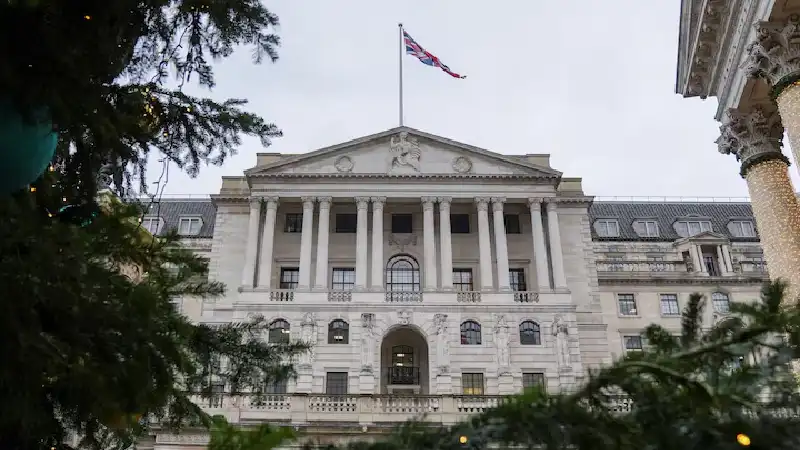
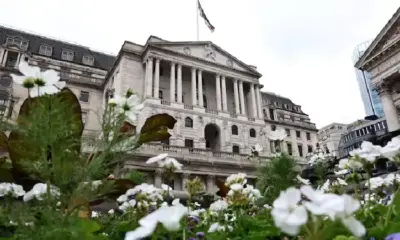
The Bank of England has kept its key interest rate unchanged at 3.75 percent after a unanimous decision by policymakers, as officials assess growing risks linked to geopolitical tensions and rising energy prices. The nine member Monetary Policy Committee voted together to maintain current borrowing costs, signalling caution amid uncertainty tied to conflict in the Middle East. The decision reflects a balancing act between controlling inflation and supporting a fragile economy, as central bankers monitor how external shocks could influence price pressures and financial stability in the months ahead.
Officials warned that inflation could climb to around 3.5 percent over the next two quarters, driven largely by higher energy costs and supply disruptions. While the central bank acknowledged that economic growth remains weak, it emphasised that inflation risks are currently the more pressing concern. Policymakers indicated they remain prepared to adjust interest rates if necessary to keep inflation aligned with the 2 percent target. The statement highlighted concerns that rising price expectations could become embedded, making it more difficult to stabilise inflation over the longer term.
Governor Andrew Bailey said the decision to hold rates allows the central bank to evaluate how global developments unfold before taking further action. He pointed to rising petrol prices and the likelihood of higher household energy bills if the conflict continues, which could place additional strain on consumers. Bailey stressed that maintaining price stability remains the Bank’s primary objective and cautioned that while markets are anticipating further rate increases, it is too early to draw firm conclusions about the future direction of policy.
Financial markets reacted quickly to the announcement, with investors increasing expectations that interest rates could rise later this year. Yields on two year government bonds surged to their highest level since early 2025, reflecting heightened speculation about tighter monetary policy. Some economists said recent spikes in oil and gas prices could push the central bank closer to raising rates if inflation pressures intensify further. However, others noted that the threshold for additional rate hikes remains high, given the current weakness in economic growth.
The decision comes at a time when major central banks around the world are facing similar challenges. The European Central Bank and the US Federal Reserve have also kept interest rates steady while signalling readiness to respond to evolving risks. Within the Bank of England itself, there are differing views among policymakers about the future path of rates. Some members have suggested that rates may need to remain elevated or even increase, while others believe there is a strong case for caution given the uncertain economic outlook.
Recent economic data has added to the complexity of the situation. Wage growth in Britain has slowed to its weakest pace in several years, which could help ease some inflationary pressure. At the same time, surveys suggest that pay settlements in 2026 may still come in slightly higher than expected, indicating that underlying inflation dynamics remain uncertain. The central bank also noted that the current geopolitical tensions are unfolding against a backdrop of subdued economic growth, which complicates efforts to manage both inflation and overall economic stability.
Looking ahead, policymakers expect to have a clearer picture by their next meeting as more data becomes available on inflation, energy markets and economic activity. The Bank of England has signalled that it will remain flexible in its approach, ready to respond to changing conditions as needed. For now, the decision to hold rates underscores a cautious strategy as officials navigate a complex mix of inflation risks, market expectations and global uncertainty.