Latest News
Experts raise concerns over AI altered campaign image shared by Reform UK deputy leader Richard Tice

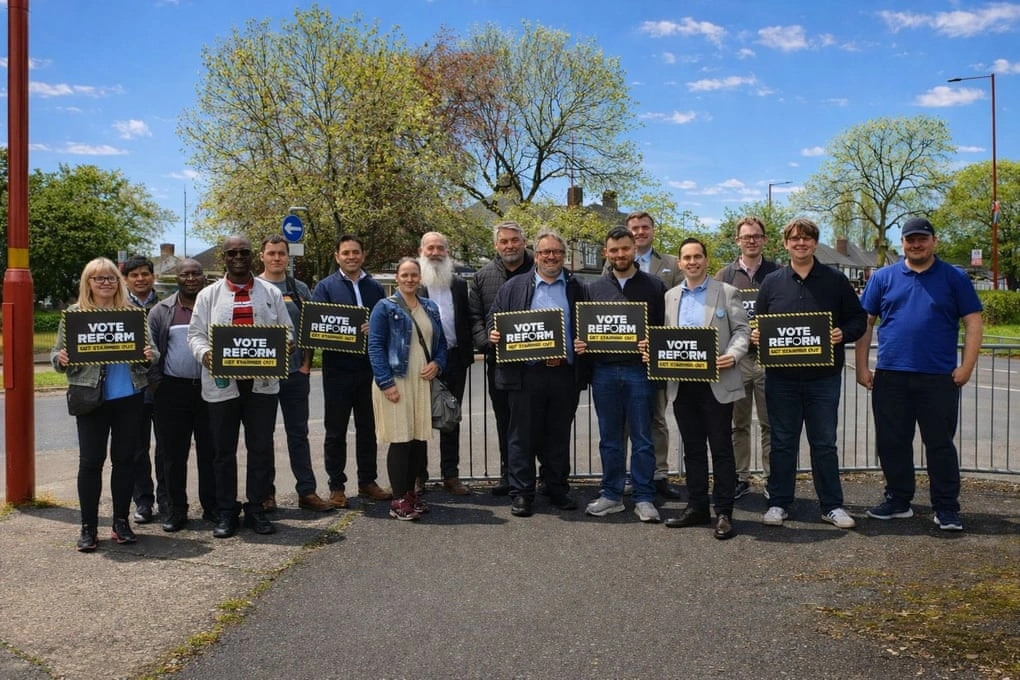
Questions have emerged over the authenticity of a political campaign image shared online by Reform UK deputy leader Richard Tice, after experts suggested it shows clear signs of artificial intelligence manipulation. The image, posted on social media platform X, depicted a group of supporters standing in a residential street in Birmingham holding placards while appearing to take part in door to door campaigning. The post was presented by Tice as evidence of grassroots enthusiasm within the party, accompanied by a message describing resilience and belief among activists.
However, shortly after the image circulated, users on X began questioning its legitimacy, pointing out visual inconsistencies that appeared unnatural. Observers highlighted distorted facial features, unusual hand shapes, and lighting effects that seemed inconsistent with real photography. These anomalies led some users to suggest that the image may have been generated or significantly altered using artificial intelligence tools, raising broader concerns about the use of synthetic visuals in political communication during an election sensitive period.
Digital forensics experts from Peryton Intelligence later reviewed the image and stated that it was highly likely to have been either generated or heavily modified using AI based editing tools. According to their assessment, several elements within the photograph displayed characteristics commonly associated with generative image systems, including unnatural blending of figures, irregular anatomical details, and inconsistent depth perception across the scene. Analysts noted that while parts of the image may have originated from a real photograph, the overall composition showed signs of digital enhancement that altered its authenticity.
The controversy intensified after Reform UK responded by disputing claims that the campaigners or the scene itself were fabricated. A party spokesperson said the photograph was real but acknowledged that the version shared by Richard Tice had been slightly edited using artificial intelligence, primarily to enhance brightness and visual clarity. This explanation has not fully settled concerns among critics, who argue that even minor AI modifications can significantly impact public perception when used in political messaging and online campaigning.
The incident has reignited debate in UK political circles about the growing role of artificial intelligence in shaping visual content shared by public figures and parties. Experts warn that the increasing accessibility of AI editing tools makes it difficult for audiences to distinguish between authentic and manipulated imagery, particularly on fast moving social media platforms. As scrutiny continues, the image remains a focal point in discussions about transparency, digital ethics, and the potential influence of AI generated content in modern political communication.