Business
FTSE 100 Slips as BP Buyback Pause and Bank Exit Weigh on Markets

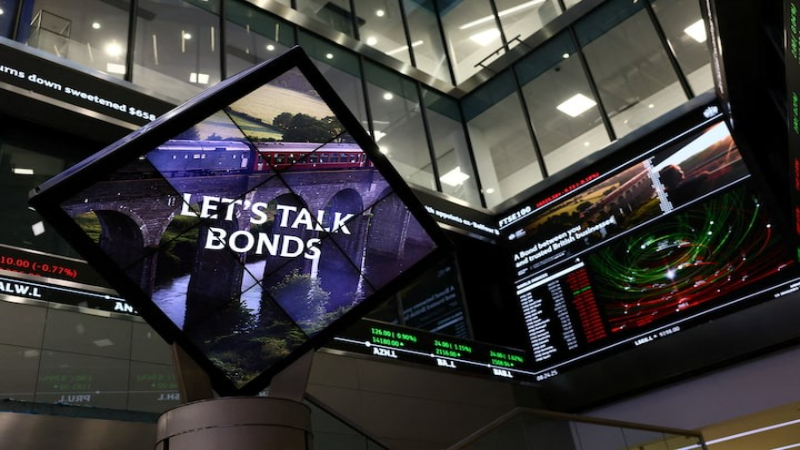
UK shares closed lower as heavyweight stocks dragged the main index down from recent record highs, with investors reacting to corporate announcements from major companies and monitoring political developments in London. The benchmark FTSE 100 ended the session modestly weaker, while mid sized companies outperformed, reflecting a mixed mood across the market.
The blue chip index fell around three tenths of a percent, reversing some of last week’s gains. In contrast, the FTSE 250 rose roughly six tenths of a percent, supported by strength in domestically focused stocks. Market participants said the divergence highlighted how individual company news rather than broad macroeconomic factors drove trading through the day.
A major contributor to the decline was BP, whose shares dropped sharply after the oil giant announced it was suspending its share buyback programme. Investors reacted negatively to the decision, which came alongside the disclosure of around four billion dollars in charges related to renewables and biogas assets. Although BP reported quarterly profit in line with expectations, the move to redirect cash away from buybacks unsettled shareholders and made the stock one of the biggest fallers on the index.
Another drag came from Standard Chartered, which saw its shares slide after the lender confirmed the departure of its chief financial officer. The Asia focused bank said the finance chief had left after a relatively short tenure, prompting concerns among investors about leadership stability at a time when global banks face tighter margins and regulatory pressure. The stock’s decline added further weight to the FTSE 100.
Away from individual company moves, investors also kept an eye on the political backdrop. Attention remained on Keir Starmer, who has faced calls to step down following controversy surrounding a senior diplomatic appointment. Starmer has rejected those demands and pledged to continue, but the situation has injected an element of political uncertainty into the market. Analysts noted, however, that UK equities were more influenced by earnings and global sentiment than by domestic politics during the session.
In currency and bond markets, conditions were calmer after several volatile days. Sterling traded in a narrower range, while UK government bond yields steadied, offering some reassurance to investors after recent sharp moves. Market participants said the relative stability helped limit losses in equities, even as select stocks faced heavy selling.
Not all companies ended the day in negative territory. AstraZeneca gained ground after forecasting steady growth in the coming year, driven by strong demand for its cancer treatments. The update boosted confidence in the drugmaker’s outlook and provided a counterweight to losses elsewhere in the index.
Banks were more mixed. Barclays reported a rise in annual profit and lifted performance targets, but its shares still slipped as the broader banking sector came under pressure. Analysts said concerns about interest rates and global growth continued to weigh on financial stocks.
Overall, the session underscored how company specific developments are shaping UK markets, with investors remaining selective as they balance earnings news, political headlines, and global economic uncertainty.