Business
Paul Dacre Tells High Court He Is Angered by Privacy Claims Against Daily Mail

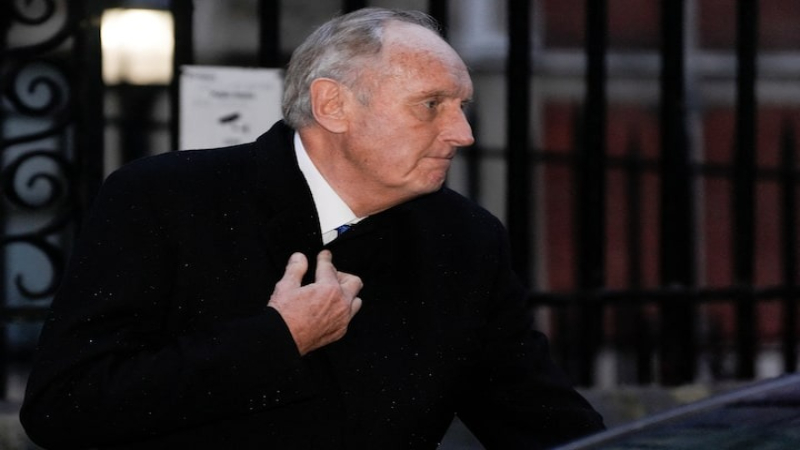
Veteran newspaper editor Paul Dacre told a London court that he feels angry and upset by allegations that the Daily Mail engaged in unlawful practices, as a major privacy lawsuit against its publisher continues to unfold. Giving evidence at the High Court, Dacre said the claims have deeply affected him, particularly because of what he described as the impact on the reputation and integrity of journalists who worked under his leadership.
The case has been brought by Prince Harry and six other public figures against Associated Newspapers. The claimants allege that titles owned by the publisher unlawfully intruded into their private lives over a period stretching from the early 1990s to 2011. The accusations include phone hacking, deception to obtain confidential records, and the use of covert surveillance methods. Associated Newspapers strongly denies all allegations and maintains that the information used in its reporting was obtained lawfully.
Dacre, who edited the Daily Mail for more than two decades and later became editor in chief of its parent company, told the court that he was speaking not only in his own defence but also on behalf of former colleagues. He said he was particularly troubled by suggestions that journalists had routinely acted dishonestly. According to Dacre, the suggestion that such practices were widespread within the newsroom was both damaging and unfair to staff he regarded as professional and ethical.
The trial began last month and has already heard evidence from all seven claimants. Several gave emotional testimony, describing the distress they say was caused by press intrusion. Among them were musician Elton John, actors Elizabeth Hurley and Sadie Frost, campaigner Doreen Lawrence, and former lawmaker Simon Hughes. Lawyers for the publisher have challenged their accounts, arguing that many of the details complained about were already public or came from authorised representatives or personal contacts rather than illegal newsgathering.
Associated Newspapers has also argued that the case is part of a broader effort by critics of the press to undermine popular newspapers. Its legal team suggested the claims were coordinated and supported by figures who have long opposed tabloid journalism, an allegation the claimants and their lawyers reject.
During questioning, Dacre acknowledged that private investigators were sometimes used by journalists but said their role was limited to finding information such as phone numbers that were already publicly available. He rejected suggestions that reporters had engaged in serious criminal behaviour such as bugging landlines or vehicles. He told the court that such claims bore little resemblance to reality inside the newsroom.
One of the most sensitive moments came when Dacre addressed evidence given by Doreen Lawrence, whose son Stephen was murdered in 1993. Lawrence has accused Mail titles of exploiting her story for credibility. Dacre said her allegations were personally painful, noting that the paper had supported her long campaign for justice. He described the claims as bewildering and deeply wounding, adding that he believed the paper’s coverage had been motivated by genuine support rather than self interest.