Politics
Senior Ministers Rally Behind Starmer as Leadership Pressure Intensifies

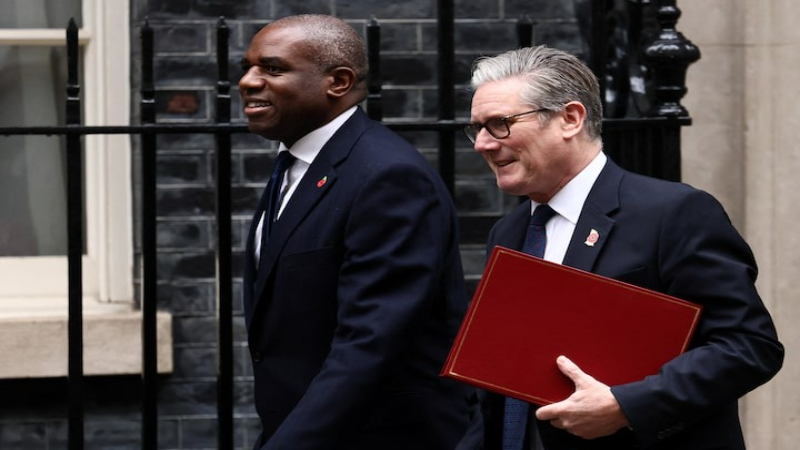
Senior figures in the UK government have publicly moved to shore up Prime Minister Keir Starmer’s position, as questions over his leadership continue to dominate British politics. Deputy Prime Minister David Lammy and Housing Secretary Steve Reed both issued statements backing Starmer, seeking to project unity after calls for his resignation from within the Labour movement intensified.
The show of support came after the leader of the Scottish Labour Party publicly urged Starmer to step aside, marking the most significant internal challenge to his authority so far. The intervention highlighted growing unease among parts of the party following the controversy surrounding the appointment of Peter Mandelson as ambassador to the United States and the wider political fallout linked to the Epstein files.
Lammy, seen as one of Starmer’s closest allies and a central figure in the government, urged colleagues to remain focused on Labour’s broader agenda. In a public message, he stressed that internal divisions should not derail what he described as the government’s mission to deliver change, adding that he fully supported the prime minister in continuing that work. His remarks were aimed at calming nerves within the party and reassuring voters that the leadership remains stable.
Steve Reed echoed that message, pointing to Starmer’s role in leading Labour to victory in the 2024 general election. Reed argued that changing course now would be damaging, particularly as the government faces a demanding legislative agenda and mounting economic challenges. His comments were widely interpreted as an appeal for party discipline at a moment when speculation about leadership turmoil is beginning to weigh on markets and public confidence.
The pressure on Starmer has been building steadily over recent days, fuelled by political controversy and poor polling numbers. Critics within Labour argue that the ongoing crisis risks undermining the party’s credibility and distracting from policy priorities. Supporters counter that removing a prime minister so soon after an election would deepen instability and hand momentum to the opposition.
Beyond party politics, the leadership uncertainty has begun to resonate more widely. Investors and analysts have closely followed developments, warning that prolonged political turbulence could complicate economic decision making and delay reforms. Recent movements in the currency and bond markets suggest that some traders are already factoring in heightened political risk.
Starmer has so far resisted calls to resign, insisting that his focus remains on governing and delivering on campaign promises. He has sought to frame the controversy as a challenge that can be managed through transparency and accountability, while allies argue that allowing the issue to define his premiership would be a mistake.
With local elections approaching and internal debate far from settled, the coming weeks are likely to prove crucial. Whether the public backing from senior ministers succeeds in stabilising Starmer’s position will depend on how the government handles the ongoing fallout and whether it can shift attention back to policy and performance. For now, the prime minister retains the support of key figures at the top of government, even as dissenting voices continue to grow louder.