Politics
Starmer Begins Landmark China Visit as UK Seeks Economic Reset

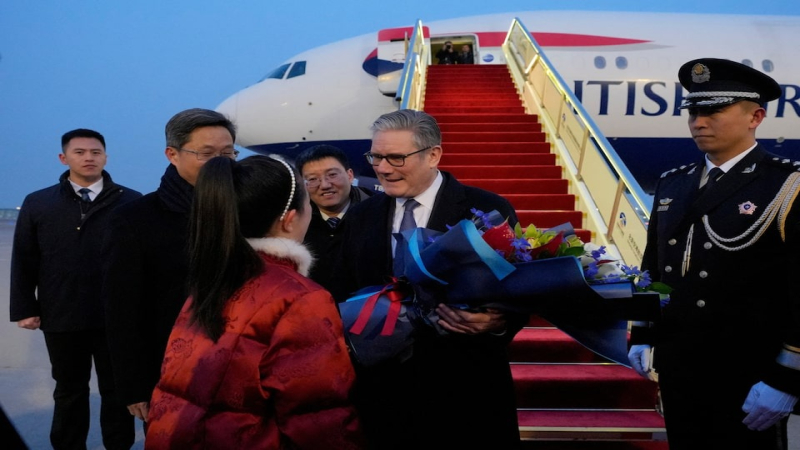
UK Prime Minister Keir Starmer has arrived in Beijing for the first visit to China by a British leader in eight years, using the trip to urge UK companies to expand their presence and seize commercial opportunities. Addressing a delegation of more than fifty business leaders shortly after landing, Starmer said the visit marked a turning point after years of strained relations and was focused on delivering tangible benefits for people at home. He stressed that engagement with the world’s second-largest economy was a matter of national interest, particularly at a time of shifting global alliances and economic uncertainty. The visit signals a more pragmatic approach to Beijing, with Downing Street hoping renewed dialogue can unlock trade, investment, and business access while still protecting domestic priorities.
The trip comes after a prolonged period of tension between London and Beijing, driven by disputes over Hong Kong, allegations of espionage, and China’s position on the war in Ukraine. Starmer acknowledged those challenges but argued that disengagement was not a realistic option, saying the UK must be capable of working with China while remaining alert to security risks. He said the government would pursue economic cooperation alongside firm safeguards, presenting the approach as balanced rather than ideological. For Beijing, the visit offers an opportunity to present itself as a stable partner to major economies at a time of global volatility. Starmer is expected to meet President Xi Jinping and Premier Li Qiang, with talks likely to focus on trade, diplomacy, and areas of cautious cooperation.
The visit also unfolds against the backdrop of renewed uncertainty in relations between Western allies and the United States. Recent tensions involving US trade threats and foreign policy disputes have prompted European governments to diversify diplomatic and economic ties. Starmer has rejected suggestions that engagement with China represents a move away from Washington, insisting that Britain’s relationship with the US remains central across defence, intelligence, and trade. He has framed the China visit as complementary rather than confrontational, arguing that the UK can maintain close ties with long standing allies while also engaging constructively with Beijing. The government believes this dual track approach strengthens Britain’s global position rather than weakening it.
While the prime minister has avoided setting out detailed negotiating positions, he has indicated there may be progress on easing travel restrictions, including the possibility of expanded visa free access for UK citizens. However, concerns remain within Westminster over national security and human rights, and Starmer has faced criticism from some lawmakers for pursuing closer engagement. Downing Street has played down expectations of major announcements, instead presenting the trip as the reopening of dialogue after years of limited contact. Officials say the focus is on rebuilding communication channels, supporting British firms operating in China, and testing whether a more stable working relationship is possible in an increasingly fragmented global landscape.