
News
Bulgarian Prime Minister Resigns as Mass Protests Sweep the Country

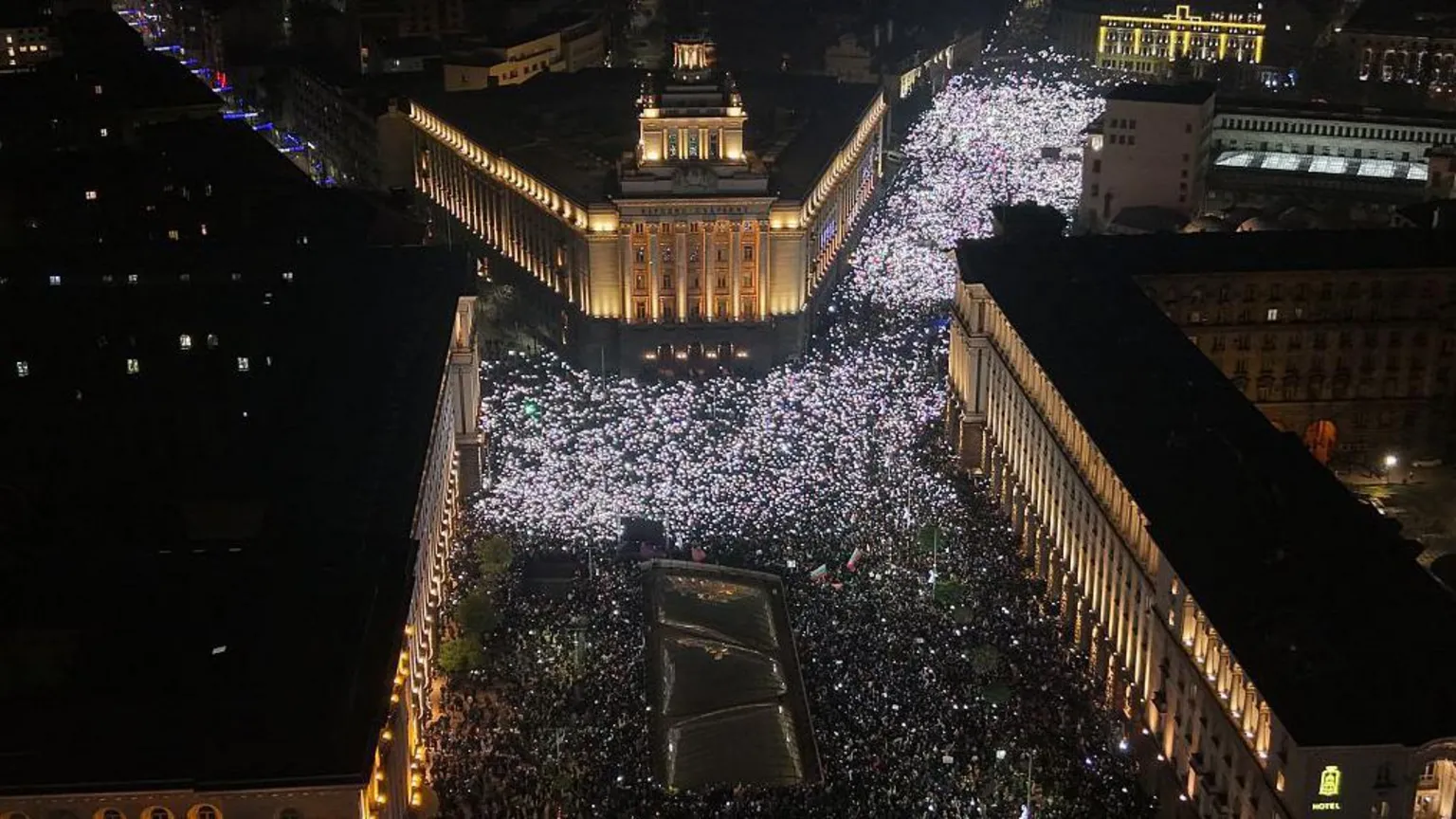
Bulgarian Prime Minister Rosen Zhelyazkov and his entire government have stepped down following huge protests that filled streets nationwide and brought tens of thousands of people into the centre of Sofia on Wednesday night. The resignation came just hours before a scheduled no confidence vote in parliament and less than three weeks before Bulgaria is set to join the euro.
Zhelyazkov’s minority centre right government, in power only since January, had been facing growing public anger over allegations of corruption and mismanagement. Demonstrations intensified over the past week, forcing the government to withdraw a contentious budget proposal for next year. But the concession failed to calm public frustration.
In a televised address, Zhelyazkov said the message from citizens was impossible to ignore. He acknowledged that people across generations had united in demanding change and that their determination had pushed the government to step aside. A statement on the government’s website confirmed that ministers will remain in their positions only in a caretaker capacity until a new cabinet is formed.
Crowds estimated between fifty thousand and one hundred thousand gathered in Sofia’s Triangle of Power and Independence Square on Wednesday evening. Protesters waved flags, chanted against corruption and called loudly for the government’s immediate departure. Powerful images of the words “Resignation” and “Mafia Out” were projected onto the parliament building, capturing the mood of a public that has grown impatient with repeated governance scandals.
President Rumen Radev, who has often clashed with the government, voiced support for the protesters last week and urged the cabinet to resign. His comments added political pressure at a moment when the country is preparing for a significant economic milestone with its entry into the eurozone.
The demonstrations represent one of the biggest waves of public mobilisation Bulgaria has seen in recent years. Many protesters said they were driven by concerns about corruption, lack of accountability and the belief that meaningful reforms had stalled. Others pointed to rising costs of living and uncertainty over upcoming economic changes.
Zhelyazkov’s resignation now opens a period of political uncertainty. Parliament will need to negotiate the composition of a new cabinet or move towards fresh elections if no agreement can be reached. Analysts say the next government will face the immediate challenge of restoring public trust while ensuring Bulgaria’s smooth transition into the eurozone.
For now, the protests have succeeded in achieving their primary goal, but they have also revealed deeper frustrations that any future government will have to confront.



