
Tech
A ‘Toaster with a Lens’ The Untold Story of the First Handheld Digital Camera

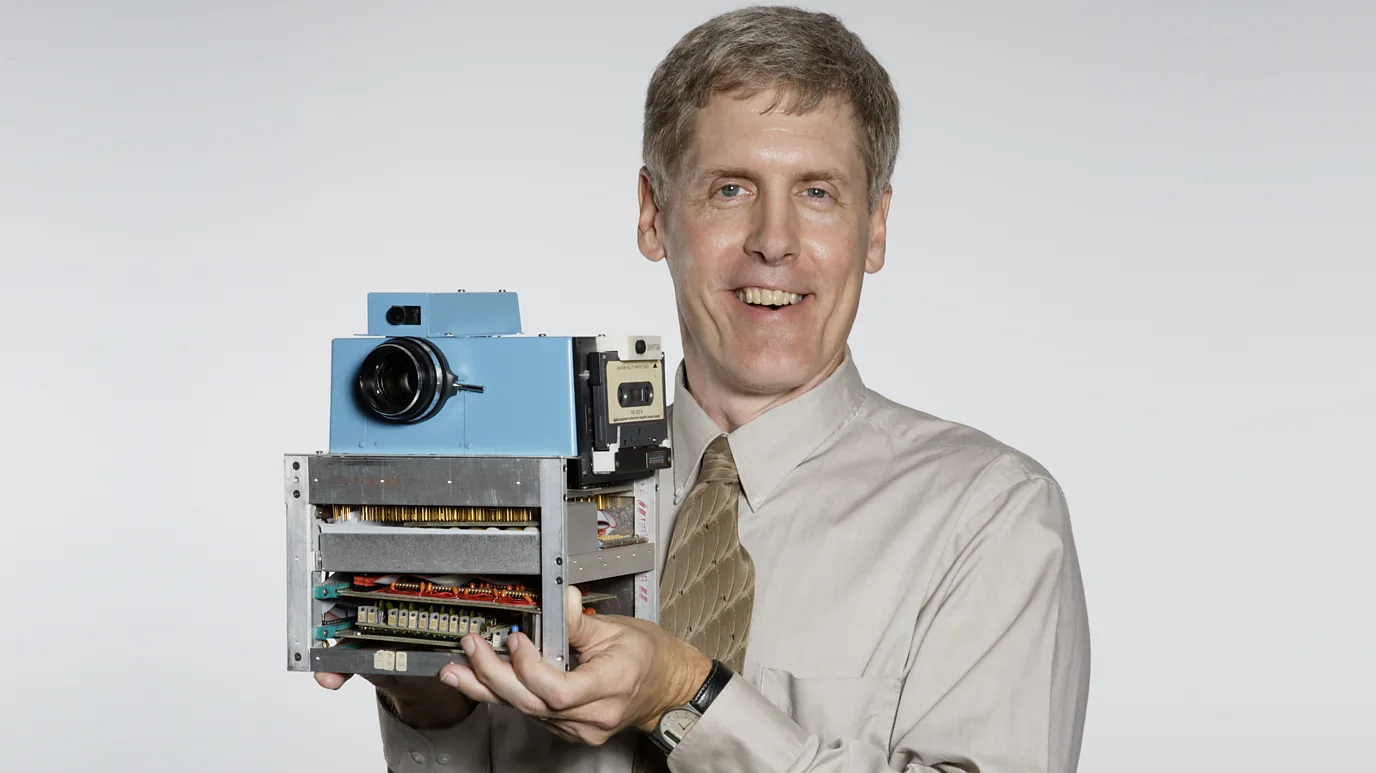
In 1975, a young engineer working at Eastman Kodak captured the world’s first handheld digital photograph. The device he used looked nothing like the sleek digital cameras we know today. It was a clunky, box shaped machine that colleagues jokingly compared to a “toaster with a lens.” Yet that humble creation marked a turning point in the history of photography. What began as a small experiment by a curious 23 year old changed how billions of people would one day capture memories.
Kodak’s Golden Era and a New Kind of Engineer
When Steve Sasson joined Kodak in 1973, the company was a powerhouse of American innovation. Founded by George Eastman in the 1870s, Kodak became synonymous with film photography. People bought Kodak cameras, loaded them with Kodak film, processed images with Kodak chemicals and printed them on Kodak paper. The company’s entire ecosystem revolved around film. Its famous slogan, “You push the button, we do the rest,” captured the magic of making photography simple and accessible.
Kodak’s success was built on decades of chemical research and mechanical engineering. But Sasson did not fit neatly into either of those worlds. He was an electrical engineer, fascinated not by film emulsions or shutter mechanics but by the potential of emerging electronics. While Kodak was still thriving on film, Sasson sensed that the future of photography might move in a very different direction.
The Birth of an Unlikely Invention
At the time, few people at Kodak could imagine a camera that didn’t rely on film. Sasson, however, saw promise in a new type of device called a charge coupled device, or CCD. This sensor could convert light into electronic signals, a concept still unfamiliar to most in the photography world.
Working with limited resources and a great deal of curiosity, Sasson assembled a prototype. It was crude, heavy and far from elegant. The machine recorded black and white images onto a cassette tape, and each photo took more than 20 seconds to capture and process. The resulting picture was only 0.01 megapixels. But it worked. For the first time, a camera captured an image without film.
His colleagues were stunned. Some were impressed, others puzzled. Sasson later recalled how many asked, “Why would anyone ever want to look at pictures on a screen” At the time, digital displays were rare, computers were slow and the idea of sharing photos electronically seemed unimaginable.
A Revolutionary Idea Ahead of Its Time
Although Sasson’s invention was groundbreaking, Kodak struggled to grasp its full potential. The company feared that digital photography would cannibalise its hugely profitable film business. Instead of immediately investing in the new technology, Kodak treated it as an interesting experiment rather than a future cornerstone of the industry.
Sasson continued refining the concept, demonstrating better image quality and faster processing. But digital photography still seemed too foreign, too disruptive and too far removed from Kodak’s business model. It would take another two decades before digital cameras became mainstream, and by then competitors had surged ahead.
The Legacy of a Quiet Revolution
Today, nearly every photograph taken worldwide is digital. Smartphones, tablets and professional cameras all rely on the same principles Sasson explored in the early 1970s. His “toaster with a lens” transformed how people document their lives, from family gatherings to global events. Although Kodak eventually faced decline for failing to embrace the revolution early, Sasson’s achievement stands as a testament to curiosity, persistence and technological imagination.
What began as a lonely experiment in a film dominated company became one of the most important inventions in modern visual history. Sasson may have felt out of place when he first joined Kodak, but the world of photography was forever changed because he dared to think differently.



