Entertainment
Why Several European Countries Are Boycotting Eurovision 2026 After Israel Was Approved to Compete

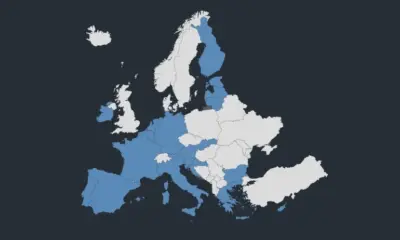
Eurovision often presents itself as a celebration of unity and music, but the lead-up to the 2026 contest has become one of the most divisive moments in its history. Ireland, Spain, the Netherlands, and Slovenia have all announced that they will not take part after Israel was allowed to compete. Their decision follows months of debate fuelled by the war in Gaza and allegations of unfair voting advantages in Israel’s favour. What was once meant to be a musical festival is now wrapped in political tension that many broadcasters say they can no longer ignore.
Calls for exclusion and the growing distrust
A number of European countries pushed for Israel to be removed from the upcoming contest citing the humanitarian crisis in Gaza and concerns about the voting results from the previous year. Spain’s broadcaster RTVE played a leading role in these discussions and even demanded that the European Broadcasting Union hold a secret ballot on the issue. According to RTVE that request was refused which only deepened concerns that the decision making process lacked transparency. Ireland’s broadcaster RTÉ echoed this sentiment saying that taking part in Eurovision would feel morally impossible given the enormous civilian suffering in Gaza.
The role of the Big Five and financial influence
Spain’s withdrawal carries extra weight because it is one of Eurovision’s Big Five a group that also includes France Germany Italy and the United Kingdom. These countries contribute the most financially to the EBU which means their artists automatically qualify for the final round each year. Seeing one of the most influential members step back highlights the seriousness of the disagreement and raises questions about how the absences may affect future contests. A festival that depends on large participating audiences is now dealing with one of its most visible fractures.
What happened at the crucial EBU meeting
Around fifty broadcasters from across Europe joined the EBU meeting in Geneva to discuss not only Israel’s inclusion but also a list of proposed rule changes. These rules were meant to discourage outside efforts to manipulate voting after accusations that Israel benefited from coordinated campaigns. BBC News learned that the vote to adopt these new rules came with a binding condition. Participants who agreed to the new measures also agreed to remove the option of voting on Israel’s participation. The EBU later stated that any member willing to comply with the revised rules could still take part in Eurovision 2026.
Responses from organisers and leaders
Martin Green the director of the Eurovision Song Contest said he was glad that members had the chance to speak openly about Israel’s role before voting. He described the meeting as intense honest and emotional. According to him the final result showed a shared belief that Eurovision should resist becoming a platform for political battles and remain a space committed to neutrality. Meanwhile the decision was warmly welcomed in Israel. President Isaac Herzog praised the outcome calling it an act of solidarity and a sign that Israel would not be pushed aside by its critics. He expressed hope that Eurovision would continue to be a place that nurtures creativity and cross cultural understanding.
Ongoing worries about cultural boycotting
Israel’s national broadcaster KAN also celebrated the decision but warned of a troubling trend. Its CEO Golan Yochpaz said attempts to block Israel’s participation amounted to a cultural boycott. He argued that once such boycotts begin it becomes unclear where they will stop or who else might be targeted. With Eurovision approaching its seventieth anniversary he questioned whether this is how the contest should be remembered. While Eurovision insists it wants to stay out of politics the responses from countries pulling out suggest that separating art from global conflict is becoming more complicated than ever.