News
Why Putin’s Visit to India Matters: Oil, Defence and Shifting Geopolitics

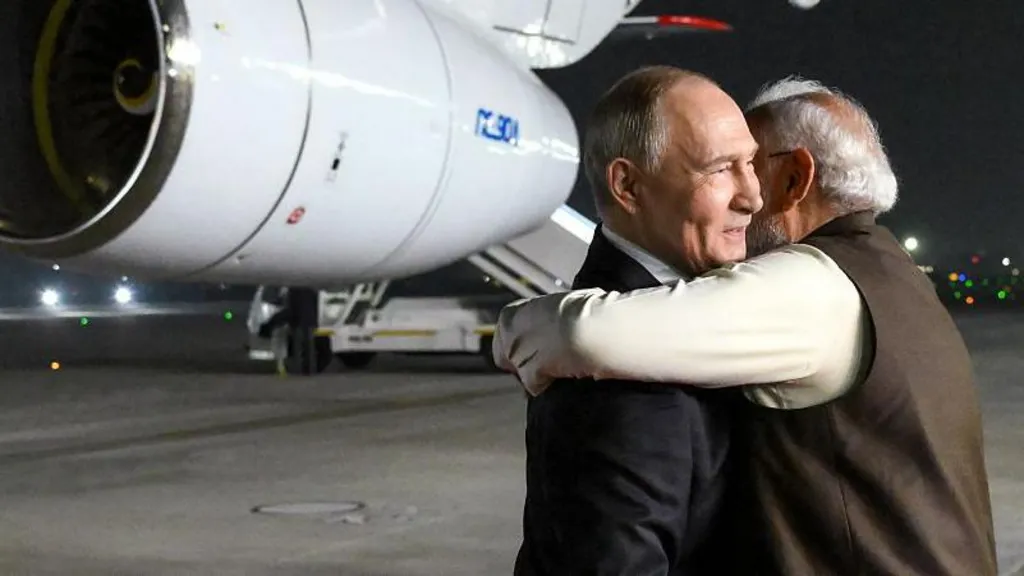
Russian President Vladimir Putin has arrived in New Delhi for a two-day visit, where he was warmly embraced by Prime Minister Narendra Modi before the two leaders began their annual summit. The visit comes at a sensitive moment in global politics, with major powers recalibrating their strategies around energy, security, and the ongoing Ukraine conflict. For India and Russia, long-standing partners with decades of diplomatic and defence cooperation, the meeting is an opportunity to reaffirm ties and negotiate new agreements that reflect today’s geopolitical realities.
Delhi and Moscow are expected to sign a series of deals across defence, energy, and trade. The discussions come just months after the United States increased pressure on India to reduce its purchases of Russian oil. Despite that pressure, India has continued buying discounted crude, arguing that it must prioritise its own economic stability and energy security. Indian officials have repeatedly stated that oil imports from Russia are a commercial decision, not a political alignment.
Putin’s visit also comes at a time when U.S. President Donald Trump’s administration is engaged in talks with both Russia and Ukraine, seeking a political solution to the war. India has maintained a neutral stance on the conflict, calling for dialogue while avoiding direct criticism of Moscow. For Russia, India remains an important partner in Asia, one that has not joined Western sanctions and continues to offer diplomatic balance as Moscow faces global isolation.
The personal relationship between Modi and Putin has played a key role in keeping the partnership steady. The two leaders have met frequently over the years and continue to describe their ties as based on trust, mutual respect, and shared strategic interests. Defence cooperation remains a central pillar. India relies heavily on Russian military equipment, although in recent years it has diversified its suppliers. New agreements on joint production or technology transfer may be discussed during the summit.
Energy is another major theme. Beyond oil, India is looking for ways to expand collaboration in nuclear power, natural gas, and long-term energy infrastructure. Russia sees India as a stable market with significant growth potential, especially as it strengthens ties with other major Asian economies.
Trade diversification is also on the agenda. Both countries want to reduce dependence on traditional sectors and explore cooperation in pharmaceuticals, space technology and digital innovation. India has been pushing for greater access to the Russian market for its exporters, while Russia is keen to increase investment opportunities in Indian infrastructure and manufacturing.
Underlying these economic and defence discussions is a broader geopolitical calculation. India seeks to maintain strategic autonomy, avoiding alignment with any single bloc. Engaging with Russia allows Delhi to balance its partnerships with the United States, Europe and China. For Moscow India is one of the few major powers willing to engage constructively despite ongoing tensions with the West.
As the visit continues the world will watch closely for signals of how India and Russia plan to navigate an international landscape shaped by conflict, competition and shifting alliances. For both sides the summit is an opportunity to show that despite global pressures their partnership remains resilient and strategically valuable.