News
Pope Leo XIV Finds His Voice During First Foreign Trip Marked by Conflict and Compassion

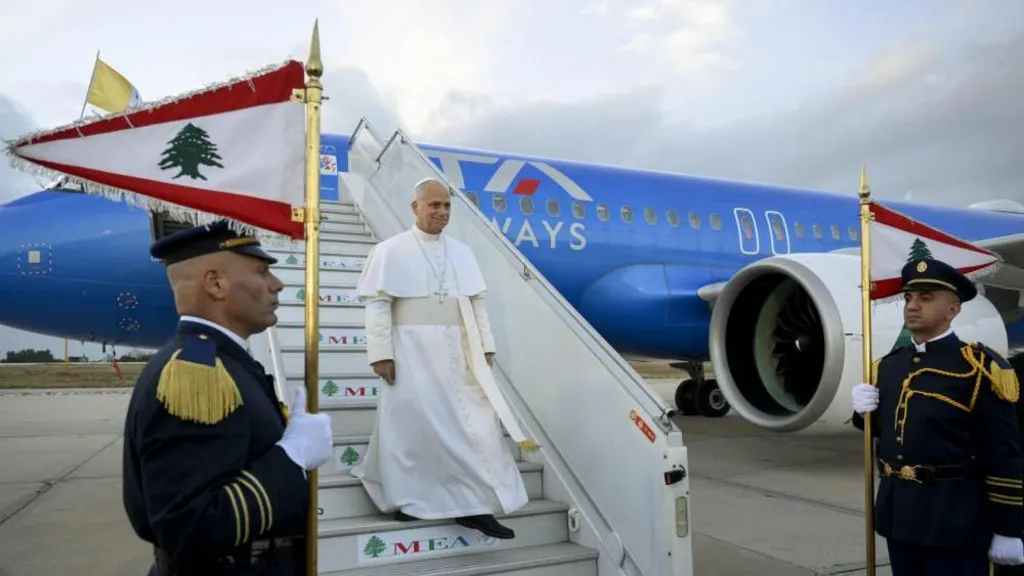
Pope Leo XIV has made a striking choice for his first foreign visit, landing in Beirut only a week after Israeli air strikes hit the Lebanese capital. For a leader known for his calm and measured approach, arriving in a country deeply affected by conflict sends a powerful message about the kind of papacy he intends to lead. His three day trip to Turkey before arriving in Lebanon has already offered rare insight into his emerging style as both a spiritual leader and head of state.
Observers have noted that Pope Leo speaks with quiet precision. His interactions with journalists are gentle and deliberate, each word carefully chosen. This contrasts with his predecessor, Pope Francis, who often spoke passionately and at length, sometimes prompting aides to clarify his off-the-cuff remarks. Francis once wrote in his autobiography that he expected his papacy to last only a few years and carried himself with the urgency of a man trying to reshape the Church quickly.
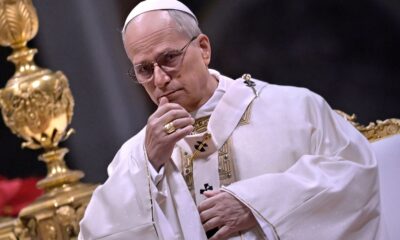
Pope Leo, now six months into his papacy, appears to be approaching the role with a deep sense of reflection. There have been moments where he has shown emotion as he takes in the weight of the responsibility he now carries. At the Cathedral of the Holy Spirit in Istanbul, he paused at the altar as members of the small Christian minority worshipped alongside him. Observers said it looked as though he was fighting back tears, a reminder of the emotional moment he experienced in May when he stepped onto the balcony of St Peter’s Basilica after accepting the role as leader of more than a billion Catholics worldwide.
Yet despite his soft-spoken demeanor, Pope Leo has shown he is willing to make strong statements when necessary. Standing beside Turkish President Recep Tayyip Erdogan, he criticized powerful nations for using their economic and military dominance to fuel conflict, warning that the future of humanity was at risk. At an event marking the 1700th anniversary of a historic Christian council in Iznik, he urged the world to reject the use of religion as justification for violence or extremism.
During the flight from Istanbul to Beirut, he addressed the long running Israeli Palestinian conflict and said that any lasting solution must include a Palestinian state. He acknowledged that Israel does not accept this but emphasized that the Vatican remains a friend to Israel and seeks to serve as a mediating voice.
His first stop in Lebanon was a symbolic gathering with the country’s political leaders, where he reminded them that public office must be rooted in service to the people. He has described his mission in Turkey and Lebanon as one of peace, and anticipation for his arrival in Lebanon has been immense. Patriarch Bechara al Rahi, head of the Maronite Catholic Church, said the visit gives hope to people who feel abandoned during a time of war.
The Pope has received warm welcomes from all communities, including Christians, Muslims, and Druze. Even Hezbollah issued an open letter expressing appreciation for his presence. As his motorcade made its way through Beirut, Lebanese, Vatican, and Hezbollah flags were all raised along the route, an unusual sight that reflects the unique role he plays.
Throughout the trip, Pope Leo has positioned himself as a bridge builder, reaching across faiths, political divides, and even internal tensions within the Catholic Church. His early steps suggest a papacy rooted in listening, compassion, and a steady but firm voice in turbulent times.